You added a pet fee, raised your cleaning fee and started charging for extra guests. Your RevPAR didn't move, because RevPAR only counts nightly revenue. Total revenue per available room, usually shortened to TRevPAR, is the number that shows whether those fees changed anything, and the extra step in this guide shows whether they earned you money or just covered costs.
Start with one action today: export last month's payout reports from every channel and split each booking into four columns: nightly revenue, cleaning fee, other guest-paid fees, and taxes. Everything below works from that sheet.
What is total revenue per available room, and how is it different from RevPAR?
Total revenue per available room is everything guests paid you in a period, nightly rate plus fees and paid extras, divided by the nights your unit was available for sale, booked or not.
RevPAR uses the same denominator but only nightly revenue on top. If you haven't set up RevPAR yet, the RevPAR guide covers which nights count as available and how to compare price changes. TRevPAR builds on it, so fix those definitions first and reuse them here.
The difference is the numerator. Here's where each revenue line belongs:
| Revenue line | In RevPAR? | In TRevPAR? | Watch out for |
|---|---|---|---|
| Nightly rate | Yes | Yes | Use the same gross or net basis in both |
| Cleaning fee | No | Yes | Charged per stay, so short stays inflate it |
| Pet fee | No | Yes | Usually covers extra cleaning, not profit |
| Extra-guest fee | No | Yes | Often tied to extra linens and utilities |
| Paid add-ons (early check-in, bikes) | No | Yes | Only if collected through an allowed channel |
| Taxes you collect for authorities | No | No | Not your revenue |
| Security deposits | No | No | Refundable, not earned |
Hotels use TRevPAR to capture restaurant, spa and parking income alongside rooms. For a whole-home rental, the extras are smaller and mostly fees attached to the booking, which is exactly why they're easy to overlook.
How do you calculate TRevPAR for a vacation rental?
To calculate TRevPAR, add nightly revenue and every guest-paid fee or extra for the period, then divide by available nights, using the same available nights you used for RevPAR.
TRevPAR = (nightly revenue + guest-paid fees and extras) ÷ available nights
TRevPAR = RevPAR + (fees and extras ÷ available nights)
TRevPAR alone can't tell you whether a fee made money, because many fees exist to cover a cost. So add one more line.
Extras margin per available night = (fees and extras − direct cost of providing them) ÷ available nights
Direct cost means what you pay because of that fee: the cleaner's invoice for each turnover, the extra pet clean, the laundry for an extra guest.
Worked example (hypothetical)
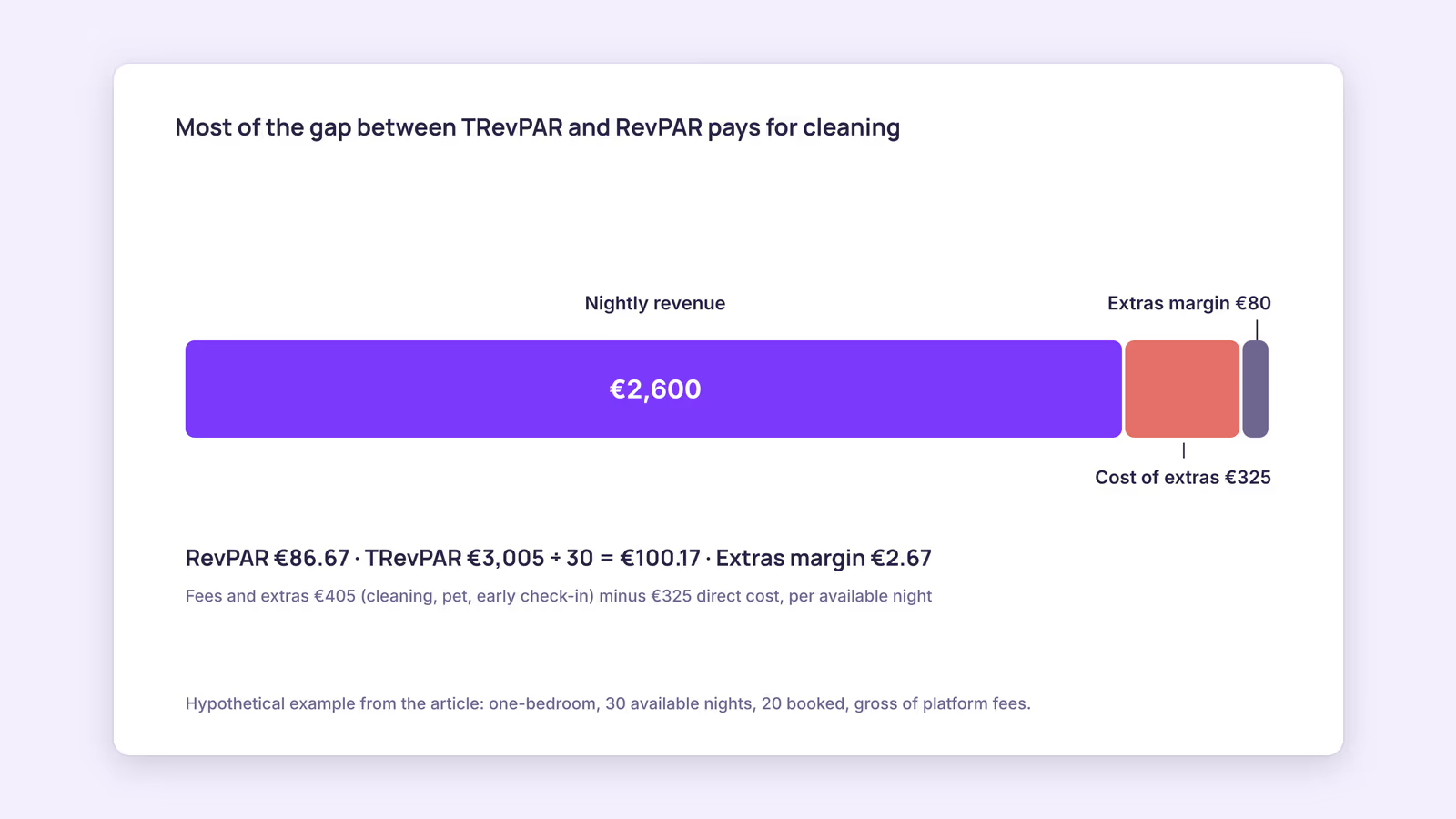
Consider a hypothetical one-bedroom apartment in a 30-night month. It's open every night, books 20 nights across five stays at an average of €130 a night, and all figures are gross of platform fees.
| Line | Revenue | Direct cost | Notes |
|---|---|---|---|
| Nightly revenue | €2,600 | — | 20 nights × €130 |
| Cleaning fees | €300 | €275 | 5 stays × €60 charged, €55 paid to cleaner |
| Pet fees | €80 | €40 | 2 stays × €40, €20 extra cleaning each |
| Early check-in | €25 | €10 | 1 guest, rush fee to cleaner |
| Total | €3,005 | €325 |
Now run the three numbers:
- RevPAR: €2,600 ÷ 30 = €86.67
- TRevPAR: €3,005 ÷ 30 = €100.17
- Extras margin per available night: (€405 − €325) ÷ 30 = €2.67
TRevPAR is €13.50 higher than RevPAR, which looks like a strong extras business. But only €2.67 of that €13.50 is margin; the rest pays for cleaning. This suggests the useful question isn't "how high is my TRevPAR?" but "how much of the gap to RevPAR do I keep?"
When does a higher TRevPAR not mean you earned more?
A higher TRevPAR doesn't mean more profit when the extra revenue comes from fees that mostly pass through to costs, from shorter stays that trigger more turnovers, or from fees a platform also takes commission on.
Three patterns to check before you celebrate a rising number:
- Shorter stays. Book the same 20 nights in the example as eight stays instead of five and cleaning fees rise from €300 to €480. TRevPAR climbs by €6, but you also pay for three more cleans and three more turnovers. Our recommendation: compare TRevPAR and extras margin side by side whenever average stay length changes.
- Platform fees on extras. Airbnb's service fee article says the host fee is calculated on the nightly price plus fees you charge, such as cleaning. Booking.com's commission page lists cleaning and service fees within the total booking amount it charges commission on. So a gross TRevPAR overstates what reaches your bank. Run one booking through the Airbnb fee calculator to see the difference.
- Fees that are capped or meant for costs. Airbnb's pet fee article says a pet fee can't be more than your nightly base rate and should only cover the cleaning you'd expect after hosting pets. Service animals always stay free. Treat pet fees as cost recovery, not a growth lever.
If TRevPAR rises while extras margin stays flat, you've grown turnover, not income. If both rise, a fee or add-on is actually earning its place.
Which extras can you charge, and where can you collect them?
On Airbnb you can add cleaning, pet and extra-guest fees to home listings, plus optional add-ons disclosed in the listing and collected through the Resolution Center; direct bookings follow your own terms.
What each channel allows shapes what can show up in TRevPAR at all:
- Airbnb listing fees. The additional fees article lists three fees for home listings: cleaning, pet and extra guest. Hosts using Airbnb's professional hosting tools can add four more: resort, linens, management and community fees. The same article says hosts shouldn't charge fees or penalties for guests failing to do cleaning or checkout tasks.
- Airbnb optional add-ons. Airbnb's article on when hosts ask for more money says hosts may charge for optional add-ons such as upgrades or amenity access only if they're clearly stated in the listing description before booking and collected through the Resolution Center. Off-platform collection is generally not allowed, with limited exceptions for hotels and some software-connected hosts.
- Booking.com. Fees you add become part of the total booking amount, so they're commissionable as described on the commission page above.
- Direct bookings. You set the terms, but you still need the fee in your booking total and on the invoice, or it won't reach your sheet.
Our recommendation: before adding any new extra, write down its direct cost and how you'll collect it on each channel. If either answer is unclear, the extra will distort your numbers more than it helps them.
When this advice does not apply
- Single-channel hosts who never charge fees. If your only revenue is the nightly rate, TRevPAR equals RevPAR and you can skip it.
- All-inclusive pricing. If you fold cleaning into the nightly rate, it already sits in RevPAR. Compare periods on the same pricing model only.
- Hotels and serviced apartments. They have more fee types and different collection rules on Airbnb, and food, parking or spa income belongs in a fuller hotel-style TRevPAR.
- Tax and accounting. Whether a fee counts as your income, and whether VAT applies to it, depends on your country. Ask an accountant.
What to do next
- Split last month's bookings into nightly revenue, cleaning fees, other fees and taxes.
- Calculate RevPAR and TRevPAR on the same available nights.
- Add the direct cost of each fee and calculate extras margin per available night.
- Repeat for the same month last year, noting any change in average stay length.
- Drop or reprice any extra whose margin is near zero once platform fees are included. For the wider KPI set, see our guide to short-term rental financial metrics.
FAQ
What's the difference between TRevPAR vs GOPPAR?
TRevPAR counts every revenue line per available night. GOPPAR, gross operating profit per available room, subtracts operating costs first. The extras margin line above sits between them: it removes only the direct cost of each fee.
What is total revenue per occupied room?
It divides total revenue by booked nights instead of available nights, which makes it a TRevPAR version of ADR. It shows what each stayed night brings in, but ignores empty nights.
Should cleaning fees count toward TRevPAR?
Yes, if guests pay them to you. But report them next to their cost, because a cleaning fee usually funds a cleaner rather than profit.
BookBed Pro: auto-invoicing and VAT reports, so the invoice side of your monthly bookkeeping isn't another spreadsheet to build by hand. See Pro pricing.
Sources
- Airbnb Help Center, "Add additional fees to home listings" — Verified 2026-09-30
- Airbnb Help Center, "Add a pet fee for home listings" — Verified 2026-09-30
- Airbnb Help Center, "If a host asks for more money" — Verified 2026-09-30
- Airbnb Help Center, "Airbnb service fees" — Verified 2026-09-30
- Booking.com for Partners, "Understanding your commission" — Verified 2026-09-30