You have a spare apartment, a room, or a property you're thinking of buying, and you want to know how to start an Airbnb without losing money in the first year. The honest answer is that most of the work happens before you create a listing: permissions, numbers and setup decide whether hosting pays.
Start with one action today: write down who has a say over the property. That list usually includes your city or municipality, your landlord or mortgage lender, and any homeowners' association or co-op board. If any of them can say no, you need their answer before you spend money on furniture.
How to start an Airbnb: what should you know before starting?
Before starting an Airbnb, confirm that short-term renting is legal at that address, that your lease or building rules allow it, and that your insurance covers paying guests. Everything else depends on those three answers.
Airbnb's own responsible hosting guide for the United States tells hosts to check HOA or co-op board rules for prohibitions on subletting, read their lease and check with their landlord, and look up city, county or region-specific rules. It also suggests working with your insurance agent or carrier to work out which coverage you need. Similar country guides exist; the UK version, for example, notes that hosting income is generally taxable and points hosts to HM Revenue & Customs.
A few questions to answer in writing:
- Is a permit, registration or license required? Many places require one, and some cap the number of nights you can rent. Rules change by city and sometimes by neighborhood, so check your local government's site rather than a summary.
- Does your lease or building allow it? A lease clause or HOA bylaw can ban stays under a set length even where the city allows them.
- Who covers damage and liability? Airbnb includes host damage protection and liability insurance under AirCover for Hosts, but its guide still points you to your own insurer for your specific obligations.
- What taxes apply? Income tax, and in many places occupancy or tourist tax. Airbnb's guides say plainly that they aren't legal or tax advice.
What does it cost to start an Airbnb, and will it pay?
What it costs to start an Airbnb depends on your setup, but the test is simple: expected payout after Airbnb's fee must cover rent or mortgage, cleaning, utilities, supplies, insurance, software and repairs, with room left for a slow month.
Don't rely on a single revenue estimate. Look at comparable listings near you for nightly price and how booked their calendars look across different seasons, then run the numbers conservatively.
Airbnb's fee structure matters here. According to Airbnb's service fee article, most hosts on the single host-only fee pay 15.5% of the booking subtotal (nightly price plus host fees like cleaning, not taxes). That single fee is mandatory for some hosts, including those using property management software. Hosts still on the split-fee model pay 3% (4% in Brazil and Mexico) while the guest pays a separate fee, but Airbnb says that model is being phased out. Our recommendation: plan with the host-only fee so your numbers don't depend on a structure that may not apply to you. You can model both in the Airbnb fee calculator, and the host fees explainer walks through each line.
Worked example: a monthly cost test
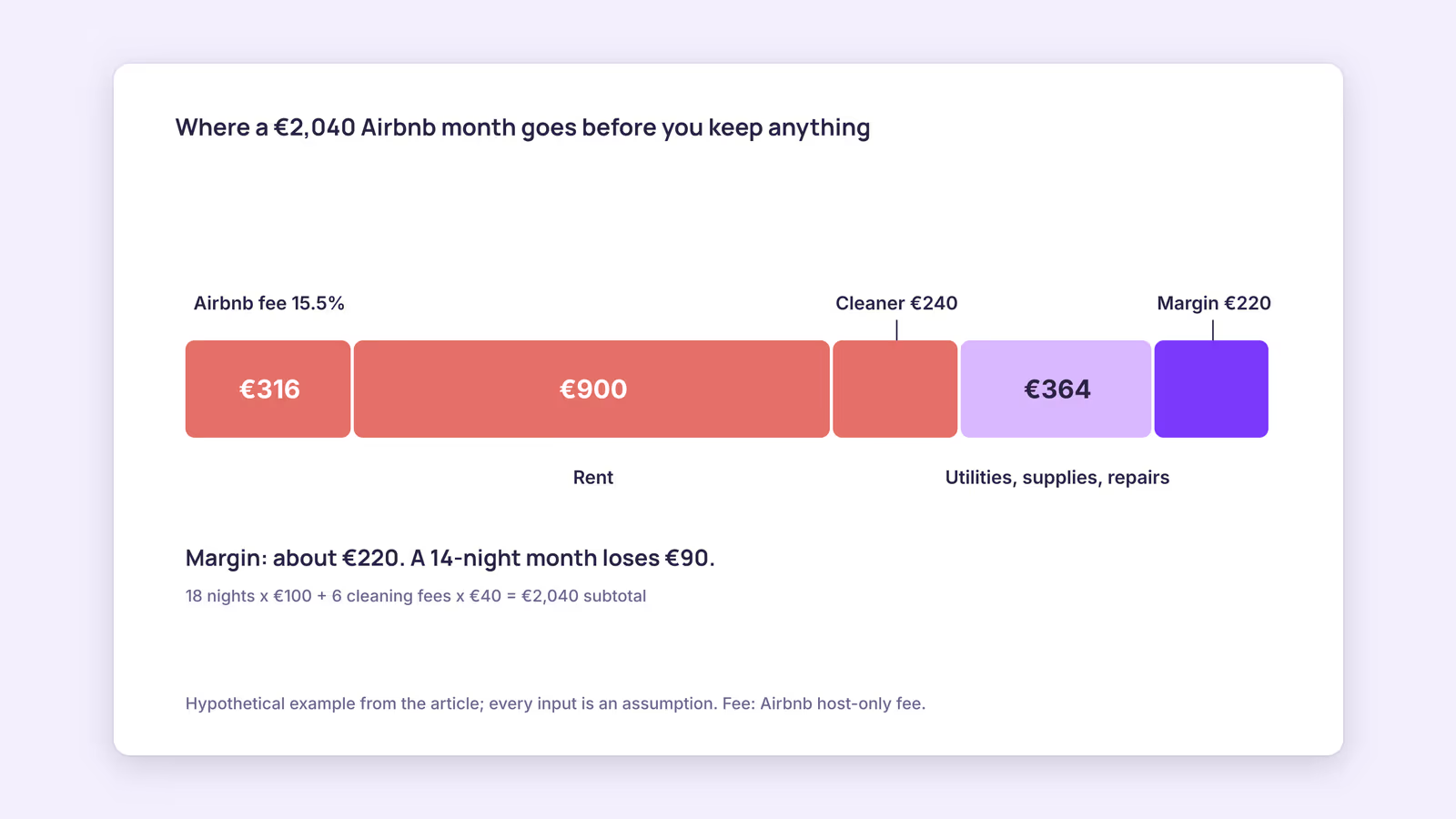
Consider a hypothetical one-bedroom apartment the host rents from a landlord. Every input below is an assumption for illustration; replace each with your own numbers.
| Line | How it's calculated | Monthly amount |
|---|---|---|
| Nightly revenue | 18 booked nights x €100 | €1,800 |
| Cleaning fees charged | 6 stays x €40 | €240 |
| Booking subtotal | Nightly revenue + cleaning fees | €2,040 |
| Airbnb host-only fee | 15.5% of €2,040 | −€316.20 |
| Payout | Subtotal minus fee | €1,723.80 |
| Rent | Assumption | −€900 |
| Utilities | Assumption | −€150 |
| Cleaner | 6 turnovers x €40 | −€240 |
| Consumables | Assumption | −€60 |
| Insurance | Assumption | −€40 |
| Software | Assumption | −€12 |
| Repairs reserve | 5% of subtotal (our assumption) | −€102 |
| Monthly margin | Payout minus costs | €219.80 |
Now stress it. If bookings drop to 14 nights and 5 stays, the subtotal falls to €1,600, the payout to €1,352 and, with cleaning at €200 and repairs at €80, costs come to €1,442. That month loses €90. This suggests a margin this thin can't absorb an ordinary slow month, before counting furnishing costs or the unpaid time you spend on guests and turnovers.
A quick way to read your result:
| Your stressed-month result | What it usually means | Next step |
|---|---|---|
| Positive with room to spare | The model can absorb a slow month | Move on to setup |
| Close to zero | One bad month wipes out gains | Cut fixed costs or rethink price |
| Negative | The deal depends on peak months | Don't sign or buy yet |
How do you become an Airbnb host once the numbers work?
To become an Airbnb host, you create an account, add your listing's details, photos, price, calendar and house rules, choose a cancellation policy, and publish. The work that makes it succeed is the setup around that listing.
Furnish for turnovers, not just photos. The bed matters most to guests. Beyond that, choose durable furniture, washable textiles and duplicate linen sets so a cleaner can turn the place around quickly.
Decide how guests get in. Self check-in with a keypad or lockbox saves you from meeting every guest, but check that your building and lease allow it. Write clear arrival instructions before your first booking.
Pick a cancellation policy on purpose. Airbnb's cancellation policies range from Flexible (full refund until 24 hours before check-in) to Firm (30 days), with stricter options by invitation only. Stricter policies protect income but can make your listing less attractive to some guests.
Write an honest listing. Say what guests will actually experience, including stairs, street noise or a small kitchen. Our guide to writing an Airbnb listing description covers structure and wording.
Plan your calendar before you add a second platform. If you later list on Booking.com too, each platform keeps its own calendar. Calendar links between them update on the platform's schedule; Airbnb says it refreshes connected calendars every 3 hours. Until you have a way to keep dates aligned, one platform is simpler.
What's on a starting an Airbnb business checklist for launch week?
A launch-week checklist covers pricing, the first bookings and how you'll collect reviews: set a price you can defend, decide on an introductory discount, and plan your guest communication before the first request arrives.
- Consider the new listing promotion. Airbnb's discount rules say new listings can offer 20% off their first 3 bookings. It's optional, and it cuts your payout on those stays, so check it against your cost test.
- Set your first prices from comparables, then review weekly. See Airbnb pricing strategies for a method.
- Prepare message templates. A booking confirmation, arrival instructions and a checkout note cover most early questions.
- Review each stay honestly. Reviews come from genuine stays; you can't buy or trade them.
When this advice does not apply
- Hotels and serviced apartments: different fee rules, registration and tax treatment often apply.
- Hosting a room in the home you live in: some places treat primary-residence hosting differently, including tax allowances such as the UK rent-a-room relief mentioned in Airbnb's UK guide.
- Places with strict local caps or bans: if your city limits or prohibits short-term rentals, the numbers don't matter until the legal question is settled.
What to do next
- List everyone with a say over the property and get their answer in writing.
- Check your local government's site for permits, registration and night caps.
- Run the monthly cost test with your own numbers, then run the stressed version.
- Get an insurance quote that names short-term renting.
- Only then furnish, photograph and publish the listing.
FAQ
Do you have to have a business license to run an Airbnb?
It depends on where the property is. Some cities require a business license, a short-term rental permit or a registration number shown on the listing; others don't. Check your city or municipality's official site.
Can you start an Airbnb without owning property?
Sometimes. Renting a place and listing it requires your landlord's permission and a lease that allows it. Airbnb's guide tells hosts to read their lease and check with their landlord.
How does an Airbnb host get paid?
Airbnb initiates payouts after the guest checks in, usually by the end of the next business day for stays under 28 nights. New hosts may wait until after checkout for their first reservations, and bank transfers can take a few business days.
About BookBed: When you add a second platform, BookBed keeps each unit on one calendar with two-way iCal sync for Airbnb and Booking.com, so every calendar link lives in one place. Each platform still fetches on its own schedule. Start with BookBed
Sources
- Airbnb Help Center, "Responsible hosting in the United States" — Verified 2026-09-30
- Airbnb Help Center, "Airbnb service fees" — Verified 2026-09-30
- Airbnb Help Center, "How discounts are applied" — Verified 2026-09-30
- Airbnb Help Center, "Cancellation policies for your home" — Verified 2026-09-30
- Airbnb Help Center, "When you'll get your payout" — Verified 2026-09-30