You've built a direct booking site, and almost nobody finds it through Google. That's normal. Vacation rental website SEO for a small host isn't about beating Airbnb and Booking.com on "rentals in [city]." It's about winning the few searches where your own site is the most useful answer.
Your first action today: search your property's name in a private browser window and write down what shows up first. If your own site isn't on the first page for its own name, fix that before anything else in this guide.
Which vacation rental website SEO searches can a small host realistically win?
A small host can realistically win searches for their property's own name, very specific location and amenity combinations, and trip-planning questions about their area. Broad "vacation rentals in [city]" searches usually belong to large marketplaces.
Think of searches in three groups:
- Name searches. Someone saw your place somewhere and types its name. Few other pages compete, so your site should rank for it.
- Specific searches. "Two-bedroom apartment with parking near [landmark]" or "dog-friendly cabin [valley name]." Fewer people search these, but the ones who do know what they want.
- Trip-planning searches. "Where to park for [local festival]" or "[town] ferry schedule in winter." These people aren't shopping for a stay yet, but they're planning a trip to your area.
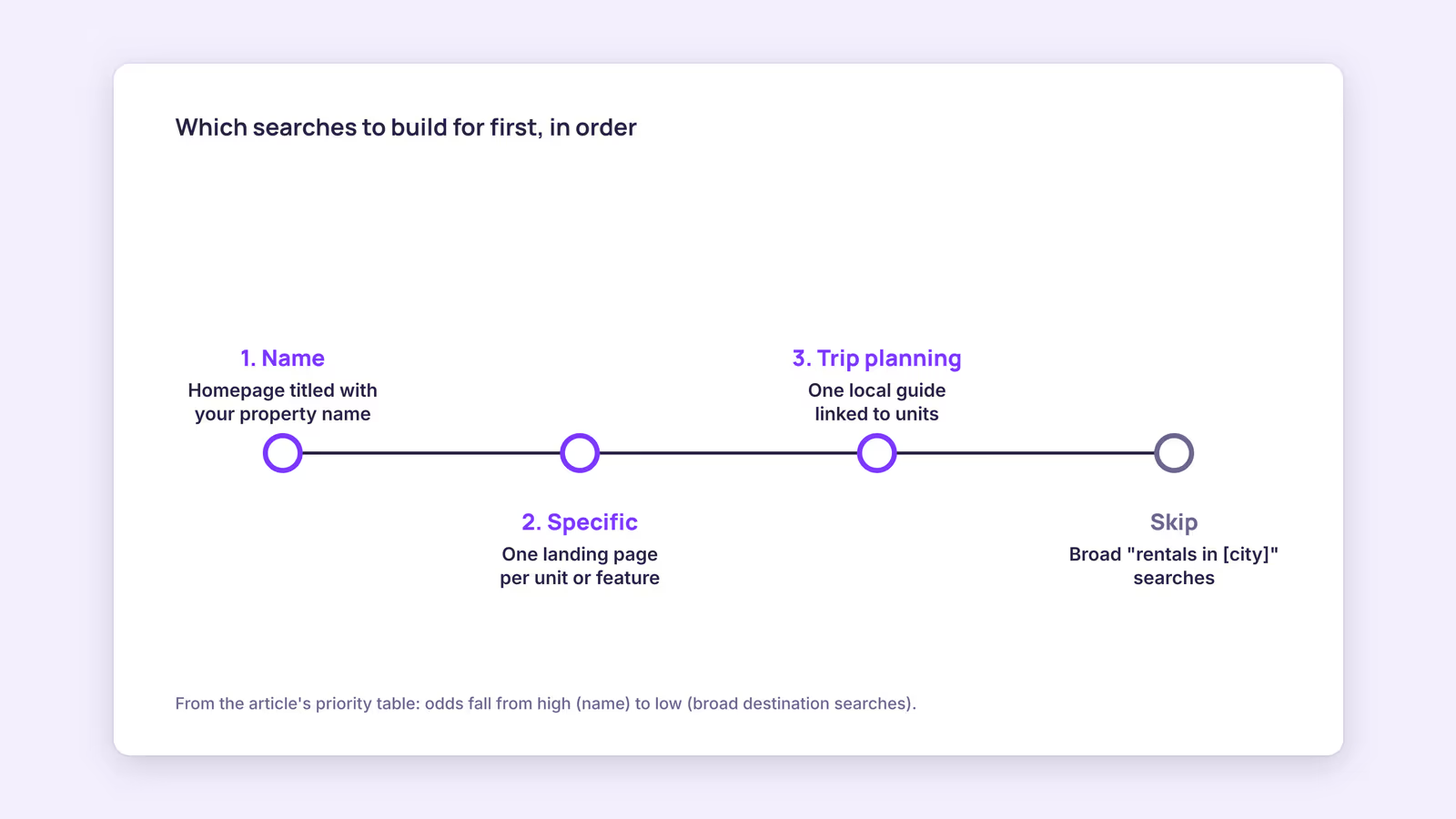
Use this table to decide what to build first:
| Search type | Example | Page to build | Your odds | Priority |
|---|---|---|---|---|
| Property name | "Casa Lemon Split" | Homepage with the name in the title and heading | High, if the name is distinctive | 1 |
| Location + feature | "apartment with sea view and parking [town]" | One landing page per unit or feature | Moderate | 2 |
| Trip planning | "[town] beaches reachable without a car" | Local guide page linking to your units | Moderate, slow to build | 3 |
| Broad destination | "vacation rentals [city]" | None | Low against marketplaces | Skip |
Our recommendation: work top to bottom and don't start a blog until priorities one and two are done.
How do you make your direct booking website rank for your property's name?
Give the property a distinctive name, use it the same way everywhere, and put it in your homepage's title element and main heading. A generic name like "Cozy 2BR Downtown" matches thousands of pages and can't be owned.
Google's title link guidance asks for a unique, descriptive and concise title on each page, warns against keyword stuffing and boilerplate, and says Google may rewrite titles it finds inaccurate or obsolete. For a homepage, something like "Casa Lemon Split | Sea-view apartments in Split" does the job.
A few practical steps:
- Pick a name you can search for. Check it isn't already used by a nearby hotel or restaurant.
- Keep it consistent. Use the same name in your listing titles where the platform allows it, on your site, on your email signature and on printed material in the property.
- Give each unit its own page. One URL per apartment, with its own title and photos, beats a single page listing everything.
Be careful with how guests move from a marketplace to your site. Airbnb's Off-Platform Policy prohibits sharing off-platform links, asking guests for contact details to book outside Airbnb, and offering discounts to move future or repeat bookings off Airbnb. This suggests a clean rule: your name can be recognizable on a marketplace, but don't use Airbnb messages or listings to push guests to your site. If you're planning a direct booking website for Airbnb guests, build recognition, not redirects.
What should a vacation rental landing page include to rank for specific searches?
A vacation rental landing page should answer one specific search completely: who the unit suits, exact location details, amenities with specifics, real photos, house rules, and a way to check dates and book on the same page.
Google's guidance on helpful content describes "people-first" content made mainly for visitors rather than to manipulate rankings. For a rental page, that means details only you know:
- Walking time to the beach, the bakery or the bus stop, measured by you
- Parking specifics: private, street, paid, how far
- Bed sizes, stairs, air conditioning in which rooms
- What the neighborhood sounds like on a Friday night
Consider a hypothetical host with two apartments in a coastal town. Rather than one page called "Our apartments," they build "Sea-view apartment with parking, [town]" and "Ground-floor studio for guests who avoid stairs, [town]." Each page targets one search a real guest might type, and each has its own availability calendar.
You can also add VacationRental structured data, but set expectations. Google's vacation rental structured data docs say the rich result feature is limited to sites that meet eligibility criteria and requires working with Google through Hotel Center. For most single-property sites, clear page content matters more than markup.
Trip-planning pages come last. One good guide answering questions your guests already ask, like parking, ferries or rainy-day options, linked to your unit pages, beats a dozen thin posts. Google's SEO Starter Guide notes that some changes take effect in hours and others in several months, so treat content as a slow build. Our guide to getting traffic to a direct booking site covers the non-search channels that work faster.
Does SEO for short term rentals need a Google Business Profile and fast pages?
A Google Business Profile usually isn't available for a vacation home, and page speed is worth checking but won't rescue a page with thin content. Many older SEO guides get the first point wrong.
Google's Business Profile eligibility rules list "rental or for-sale properties such as vacation homes" as ineligible, while sales or leasing offices are eligible. If you run a staffed office guests can visit, that office may qualify. A single apartment usually doesn't. Our Google Business Profile post goes deeper on the edge cases.
For speed, Google's Core Web Vitals page sets "good" thresholds: Largest Contentful Paint within 2.5 seconds, Interaction to Next Paint under 200 milliseconds, and Cumulative Layout Shift under 0.1. Rental sites are photo-heavy, so the usual fixes are resizing images to the size they're displayed at, using modern formats, and not loading a full gallery before the first photo appears. Check your pages in Search Console's Core Web Vitals report or PageSpeed Insights rather than guessing.
When this advice does not apply
If you manage dozens of units in one city, broad destination pages and a larger content program may be worth it, and you likely need specialist help. If your market has short-term rental registration rules, show your registration number where local law requires it; that's a legal question, not an SEO one. And if your site has no booking path, fix that first: ranking a page nobody can book from doesn't help.
What to do next
- Search your property name in a private window and record where your site ranks.
- Rewrite your homepage title element and main heading around the property name and location.
- Build one landing page per unit, each aimed at one specific search a guest would type.
- Run your key pages through PageSpeed Insights and resize oversized photos.
- Only then, write one local guide page that answers a question guests ask you repeatedly.
FAQ
What is the difference between vacation rental SEO and Airbnb SEO?
Vacation rental SEO is about getting your own website found on Google. Airbnb SEO is about ranking inside Airbnb's own search, which follows Airbnb's rules. Our Airbnb SEO ranking guide covers that side.
How long does vacation rental website SEO take to work?
There's no fixed timeline. Google's SEO Starter Guide says some changes show in hours and others take several months. Name searches tend to respond sooner than competitive location searches.
Do I need a blog for my rental website?
Not at first. Property name pages and specific unit pages come before a blog. Add a local guide once those are solid, and only if you can write from first-hand knowledge.
Turn search visitors into bookings: Once a guest lands on your unit page, the BookBed direct booking widget lets them check live availability and pay through Stripe checkout into your own Stripe account, with 0% commission from BookBed. It doesn't bring traffic by itself; that's what the steps above are for.
Sources
- Google Search Central, "Influencing your title links in search results" — Verified 2026-09-30
- Google Search Central, "Creating helpful, reliable, people-first content" — Verified 2026-09-30
- Google Search Central, "Understanding Core Web Vitals and Google search results" — Verified 2026-09-30
- Google Business Profile Help, "Guidelines for representing your business on Google" — Verified 2026-09-30
- Airbnb Help Center, "Off-Platform Policy" — Verified 2026-09-30