You launched a direct booking site, the calendar works, and the analytics show almost nobody visiting. That's normal. A new vacation rental direct booking website has no audience of its own, and learning how to get more direct bookings mostly means finding the few places where people who already know your property, or are searching for your exact area, can find it.
Your first action today: open your analytics and write down where the visits you do get come from. Most early traffic is people typing your property name or clicking a link you shared yourself. That baseline tells you which of the sources below is worth your next hour.
Where does direct booking traffic actually come from?
For a small rental, direct traffic comes from four places: people searching your property's name, past guests you're allowed to contact, people searching for your area, and people who follow you on social media or email.
Those sources differ a lot in effort, speed and the rules that apply. Two popular tactics also run into platform policies, which is where many generic playbooks go wrong.
Rules that change the usual advice:
- Airbnb guests are off limits for this. Airbnb's Off-Platform and Fee Transparency Policy prohibits asking or encouraging users to move current, future or repeat bookings off Airbnb, and prohibits soliciting guests' email or other contact details through Airbnb messaging after a booking. A "book direct next time" card in an Airbnb guest's welcome book, or a discount code sent through Airbnb messages, is the kind of thing that policy targets.
- Google Maps listings aren't available for vacation homes. Google's Business Profile eligibility guidelines list "rental or for-sale properties such as vacation homes" as ineligible. If you run a staffed office where guests check in, that office may qualify; the rental itself doesn't.
This suggests the realistic free channels are your name, your own direct guests, and content about your area, not your OTA guest list.
How to get more direct bookings: which sources come first?
Start with sources that reach people who already intend to book your specific property, then move to sources that reach people searching for your area, and only then consider paid ads.
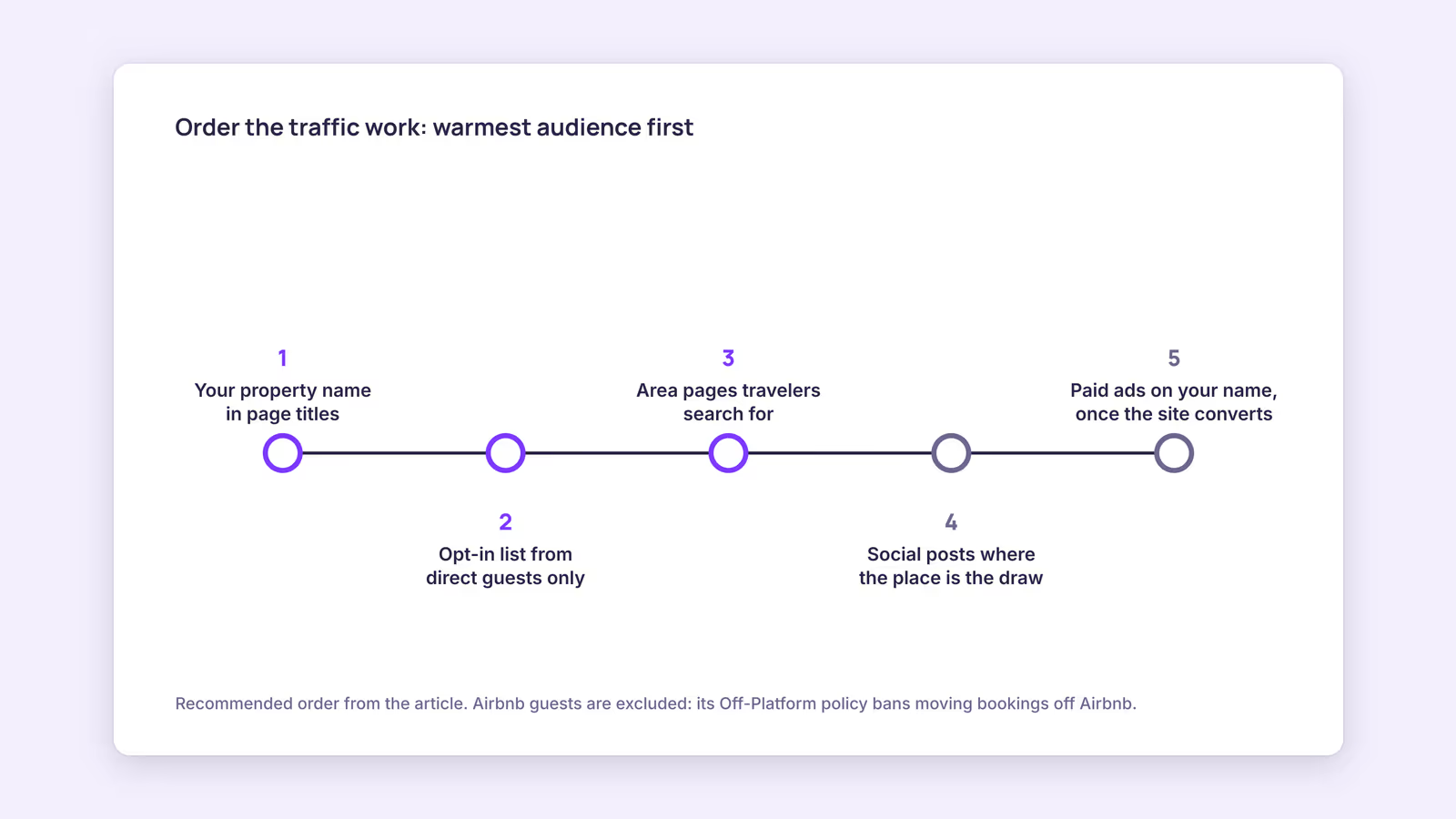
The table below is our recommendation for ordering the work. It's a decision aid, not a forecast; none of the columns predict how many bookings a source will produce.
| Source | Who it reaches | Policy check | First action | What to measure |
|---|---|---|---|---|
| Your property name | People who saw you elsewhere and search the name | None if the name is your own | Use one distinctive name everywhere and in your site's page title | Visits from branded searches |
| Past direct guests | Guests who booked with you directly and agreed to hear from you | Get consent under your local privacy law | Email previous direct guests once before your next season opens | Repeat bookings from that email |
| Area content on your site | Travelers researching your town or region | None | Write one practical page travelers search for | Search impressions for that page |
| Social media | People who follow the place, not the listing | Platform rules on promotion | Post the view, the walk to the beach, the real layout | Link clicks from your profile |
| Paid search on your name | People searching your exact name | Ad platform policies | Test a small budget only after the site converts | Cost per booking, not per click |
Here's how to work through each row.
Make your property name findable
A guest who saw your place anywhere, including a friend's photos, will often type its name into a search engine. A generic name like "Cozy 2BR Apartment" gives search engines nothing to match. A distinctive one lets your site show up for that search. Put the name in your homepage title, your headline and your photo captions, and keep it identical everywhere you control. For more on page titles and on-site search basics, see direct booking SEO strategies.
Build a list from direct guests only
Every guest who books through your own site can be asked, at checkout, whether they want to hear about future availability. That opt-in list is yours. Keep it separate from anyone who booked through an OTA. Our recommendation: send one useful email before each season with open dates and a clear link, rather than frequent discounts. The email marketing guide covers what to send.
Publish area content travelers actually search for
Travelers search for practical questions: parking near the old town, which beach suits small children, how to get there from the airport. One honest page answering a question you know well can bring in people who don't know your property yet. Link from that page to your booking page, and don't expect results in the first weeks; search engines take time to find and rank new pages.
Use social media where the place is the draw
Social posts tend to suit properties with a strong visual hook, such as a view, an unusual building or a location people seek out. If yours is a standard apartment, a few genuine posts with a link in your profile may be enough. Film what guests see, not staged ads.
Treat paid ads as a later test
Bidding on your own property name can catch people who are already looking for you, but every click costs money whether or not they book. Run it only once your site reliably turns visitors into bookings, and judge it by cost per booking.
How do you get direct bookings instead of Airbnb without breaking the rules?
You win direct bookings instead of Airbnb by being easy to find and easy to book for people who reach you on their own, while keeping Airbnb guest communication inside Airbnb's rules.
In practice that means:
- Don't use Airbnb messages to share your website, email address or a discount for booking direct.
- Don't put book-direct offers in materials aimed at Airbnb guests. Airbnb's policy covers encouraging repeat bookings off the platform, so check the current policy text before printing anything guests will see.
- Do make your site the obvious result when someone searches your property name.
- Do give your own direct guests a reason to come back.
Price also matters when guests compare. Airbnb's service fee article says the guest fee under the split-fee model is 14.1% to 16.5% of the booking subtotal, and that many hosts are moving to a single host-only fee instead. Run your own numbers in the Airbnb fee calculator before deciding whether a lower direct price makes sense.
Is your site ready to convert the traffic you get?
Traffic only helps if the site can take a booking: live availability, a clear total price, and payment on the same page, with no emailing back and forth to confirm dates.
Quick check before you spend time on traffic:
- Open your site on a phone and try to book a real date range. Count the steps.
- Confirm the calendar matches your OTA calendars today.
- Check that the total price, including cleaning and taxes, appears before payment.
- Look at how card payments are charged. With Stripe, for example, Stripe's pricing page for Ireland lists standard EEA cards at 1.5% + €0.25; rates differ by country and card type.
If any step fails, fix it first. The direct booking conversion rate guide goes deeper on what to measure.
When this advice does not apply
- Hotels and staffed properties: if you have a reception desk or office open to guests, you may be eligible for a Google Business Profile, which changes the local search picture.
- Properties listed only on Booking.com or Vrbo: each platform has its own guest-contact rules. Read them rather than assuming Airbnb's policy is the only one that matters.
- Large portfolios: with dozens of units, paid search and a dedicated brand site can be worth testing earlier than this order suggests.
What to do next
- Record where your current site visits come from, so you have a baseline.
- Pick one distinctive property name and use it in your page titles.
- Add an opt-in checkbox to your direct checkout and start a list from direct guests only.
- Write one area page that answers a real traveler question.
- Test a full booking on your phone before spending money on ads.
FAQ
How do I get direct bookings from Airbnb guests?
Not through Airbnb itself. Airbnb's Off-Platform policy bans moving current, future or repeat bookings off the platform and asking guests for contact details through its messaging. Focus on people who find you independently.
Does a vacation rental direct booking website bring guests on its own?
No. A website is a place to book, not a source of visitors. Traffic comes from your name, your own guest list, search content and social channels you build over time.
Can I list my vacation rental on Google Maps?
Google's eligibility guidelines list vacation homes as ineligible for a Business Profile. A staffed office that guests visit may qualify; the rental unit itself doesn't.
About BookBed: Once visitors arrive, they need a way to book. BookBed's embeddable direct booking widget adds availability and Stripe checkout to your existing website, with payment going into your own Stripe account and 0% BookBed commission. The widget doesn't bring traffic by itself. Try BookBed free
Sources
- Airbnb, "Off-Platform and Fee Transparency Policy" — Verified 2026-09-30
- Google, "Business eligibility and ownership guidelines" — Verified 2026-09-30
- Airbnb, "Airbnb service fees" — Verified 2026-09-30
- Stripe, "Pricing & fees" (Ireland) — Verified 2026-09-30