Every reservation you take arrives through Airbnb or Booking.com, and you keep hearing that serious hosts run a direct booking website. Maybe you should. Maybe it would sit there costing you a monthly fee while nobody visits. The answer depends less on general advice and more on who already tries to book you outside the platforms.
Start with one piece of homework before you compare any software. Go through the last 12 months and count the people who contacted you outside a platform to ask about dates: past guests, friends of past guests, groups, returning families. Then total the platform fees you paid. Those two numbers decide most of what follows.
What is a direct booking website, and what does it actually replace?
A direct booking website is a page you control where guests check your dates, see the full price and pay you directly. It replaces a platform's checkout and fee, not its audience or its support.
It comes in three common shapes:
- A full site from a direct booking website builder, with pages, photos and a booking engine in one product.
- A booking widget on a site you already have, such as a WordPress, Wix or Squarespace page with a calendar and checkout embedded in it.
- A hosted booking page, a single link you send to guests who ask.
Whichever shape you pick, the jobs a platform normally does move to you. You collect the payment, write the cancellation and damage terms, answer disputes and look after the guest's personal data. What doesn't move: the platform's search traffic, its review system and its guest support. Nobody finds a new site by accident.
Do you need a direct booking website for your vacation rental?
You need one when guests already reach you outside the platforms and their stays would cover the fixed cost. If nobody asks to book you directly today, a site is optional and won't create that demand on its own.
Use your homework numbers with this table:
| What you found | What it suggests | Our recommendation |
|---|---|---|
| No off-platform enquiries in 12 months | There's no direct demand yet to capture | Improve your platform listings first; revisit in a year |
| A few enquiries, handled by email and bank transfer | Demand exists, but manual payment slows confirmation | A hosted booking page or widget with card payment |
| Regular returning guests or referrals | Stays that could move to a cheaper channel | A booking page plus a simple site with your photos and terms |
| Groups, long stays or events asking directly | Bookings that need flexible terms | A site with clear written terms and deposits |
| One platform brings almost all your revenue | Concentration risk, whatever your enquiry count | Add a second channel; a direct site is one option |
Then check the money with a break-even formula:
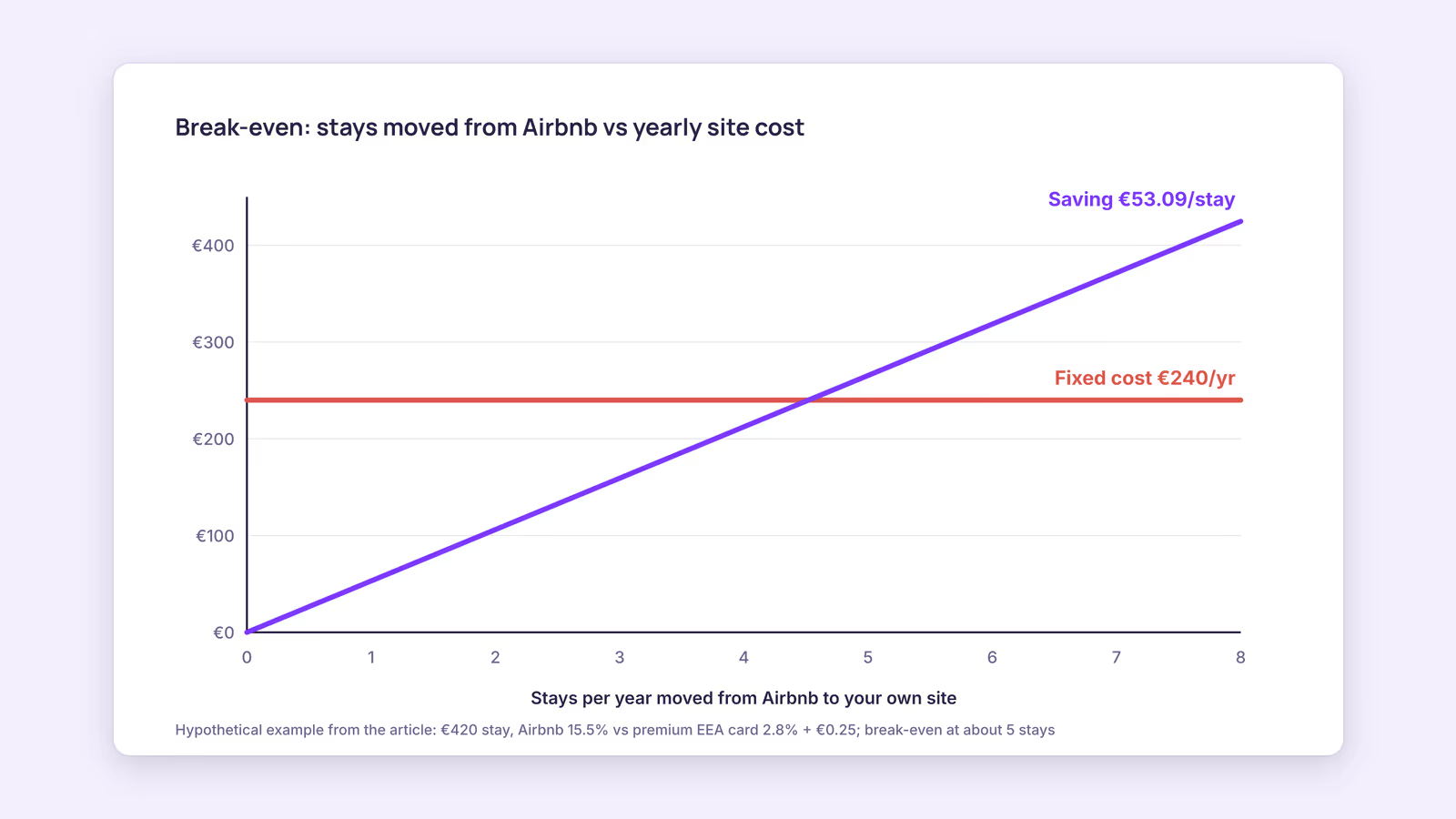
Stays needed per year = yearly direct-channel costs ÷ saving per stay
Consider a hypothetical three-night stay worth €420 including cleaning. On Airbnb's single fee structure, most hosts pay 15.5% of the nightly price plus host fees such as cleaning. A direct stay still carries card processing: Stripe's Ireland pricing lists 1.5% + €0.25 for standard EEA cards and 2.8% + €0.25 for premium EEA cards.
| Channel | Fee inputs | Fee on €420 | You keep |
|---|---|---|---|
| Airbnb, single fee | 15.5% of €420 | €65.10 | €354.90 |
| Direct, standard EEA card | 1.5% of €420 + €0.25 | €6.55 | €413.45 |
| Direct, premium EEA card | 2.8% of €420 + €0.25 | €12.01 | €407.99 |
Using the cautious premium-card figure, each stay that moves from Airbnb to your own site saves about €53. If your site, domain and booking software cost a hypothetical €240 a year, you'd need about five such stays a year to break even (240 ÷ 53.09 = 4.5).
Two caveats keep this honest. First, the saving only counts for guests who would otherwise have booked on a platform, or who wouldn't have booked at all without your site. Second, UK and other international cards cost more to process, and a card dispute adds a €20 fee on Stripe's price list. For a deeper channel-by-channel comparison, see direct booking vs OTA fees.
What risks does a direct booking website reduce, and which does it add?
A direct channel reduces how much one platform's fees, policies and ranking decide your income, but it adds work a platform used to absorb: payment disputes, refund decisions, calendar gaps and guest data.
| Platform risk | What a direct channel changes | What you take on instead |
|---|---|---|
| Fee structure changes | Direct stays carry card processing, not a platform fee | Software, site and processing costs |
| Platform-wide refund policies | Your own written terms apply, within local consumer law | Deciding refunds yourself and handling chargebacks |
| Listing suspension or lower ranking | Your site stays online whatever happens to a listing | Bringing visitors to the site yourself |
| Limited guest contact | Direct guests give you their details when they book | Storing and using that data lawfully |
A few of these rows rest on platform rules that change. Airbnb is moving all home hosts to the single fee, and hosts can't switch back once migrated. Its Major Disruptive Events Policy lets guests cancel for a refund or credit regardless of your cancellation policy when a covered large-scale event prevents the stay, and hosts get no payout for those canceled dates. On a direct booking, your terms govern instead, but consumer-protection law where you and your guest live still applies, and a guest can dispute a card charge.
What this suggests: a direct site is a hedge, not an escape. It spreads your income across one more channel you control. It doesn't remove the need for good platform listings, because that's where most new guests still find you.
The biggest new operational risk is double booking. Platforms fetch external calendars on their own schedules, so a direct booking can stay open on Airbnb or Booking.com for a while after the guest pays. The guide to building a direct booking website covers calendar setup, and it's worth blocking peak-week dates by hand until you trust the sync.
When this advice does not apply
- You're still on Airbnb's split fee. Your host-side fee is lower, so rerun the break-even with your actual rate from a recent payout.
- You list in Brazil or Mexico. Airbnb publishes a different single-fee rate there.
- You run hotel-style inventory. Many identical rooms usually need a channel manager and booking engine built for room types.
- A manager handles your distribution. Your contract may already cover direct bookings, or restrict them.
- Local rules shape your terms. Tourist tax, guest registration and refund rights vary by country and city, so check them before you write cancellation terms.
What to do next
- Count last year's off-platform enquiries and total your platform fees.
- Place yourself in the decision table and pick the lightest setup that fits.
- Rerun the break-even formula with your average stay, your card mix and your real yearly costs.
- Write cancellation, deposit and damage terms before you build anything.
- Plan where visitors will come from, using ways to get direct bookings that stay inside platform rules.
FAQ
Can I send Airbnb guests to my direct booking website?
No. Airbnb's Off-Platform and Fee Transparency Policy prohibits links off Airbnb in listings or messages, asking guests for contact details through Airbnb messaging, offering discounts to book off Airbnb, and encouraging current, future or repeat bookings to move off the platform. Repeated or severe violations can lead to suspension.
Can a Google Maps listing send guests to my rental's website?
Not for the rental itself. Google's Business Profile eligibility guidelines list vacation homes among rental properties that aren't eligible for verification.
Do I need a direct booking website builder, or is a widget enough?
If you already have a site with photos and terms, a widget adds availability and checkout to it. If you have nothing, a builder gives you pages and booking in one place. Either way, compare the total yearly cost in the break-even formula.
About BookBed: BookBed's direct booking widget embeds on your own website so guests can check availability and pay through Stripe checkout into your own Stripe account, with no BookBed commission on the booking. It won't bring visitors by itself, so it suits hosts who already have guests asking to book direct. Try BookBed free
Sources
- Airbnb Help Center, "Airbnb service fees" — Verified 2026-09-30
- Airbnb Help Center, "Major Disruptive Events Policy" — Verified 2026-09-30
- Airbnb Help Center, "Off-Platform and Fee Transparency Policy" — Verified 2026-09-30
- Stripe, "Pricing & Fees" (Ireland) — Verified 2026-09-30
- Google Business Profile Help, "Business eligibility and ownership guidelines" — Verified 2026-09-30