You list the same apartment on Airbnb and Booking.com, maybe on your own website too, and you're not sure whether the prices have to match. Someone told you Booking.com punishes you for being cheaper elsewhere. Someone else said that rule is gone. So what is rate parity, and does it still bind you?
Start with one document before changing any price: your current Booking.com agreement, meaning the General Delivery Terms that apply to your property's country. The rules differ inside and outside Europe, and your contract is the only place that tells you which version you signed.
What is rate parity, and why did booking platforms want it?
Rate parity means offering the same price for the same stay on every sales channel. A parity clause is a contract term in which a platform requires you not to offer better prices or conditions elsewhere than you offer on that platform.
The European Commission's factsheet on Booking.com and the DMA defines parity clauses as rules that require a business "not to offer more favourable terms, like better prices for the same service, on sales channels other than on the platform imposing these clauses."
Booking.com's own explainer on parity gives the platform's view: guests could trust they were seeing a property's best price without checking several sites, and a property that uses the platform's marketing but undercuts it on its own website is, in Booking.com's words, "not a fair partnership."
The rate parity meaning that matters to you is narrower than the theory, though. It's a question of which contract you signed and which rules apply where your property is.
Does Booking.com still have a rate parity clause?
Not in the European Economic Area. Booking.com removed parity clauses from its EEA terms and partner programmes in July 2024, and the EU's Digital Markets Act now bans parity requirements of any kind for Booking.com there.
Here's what the Commission's factsheet, published on 28 September 2026, says changed:
- The law. Booking.com has been a designated gatekeeper under the Digital Markets Act and has had to comply with its obligations since 14 November 2024. Under Article 5(3), it can't stop you offering different prices, availability or conditions on other online channels, "including their own websites."
- The contract. Booking.com's EEA-specific General Delivery Terms "no longer contain any references to parity," and contractual parity is no longer an eligibility criterion for the Genius, Preferred and Preferred Plus programmes in the EEA.
- Ranking and programmes. External prices aren't used for default ranking or for eligibility for those programmes. From September 2026 they also no longer count for Booking Sponsored Benefit eligibility.
- The extranet. External price scans shown in the extranet are "for information only," and the "competitive" and "non-competitive" labels have been removed.
Booking.com confirms on its parity explainer that it no longer uses parity clauses with partners in the EEA. It also disputes that its past clauses broke competition law, and legal claims about them are still running. That dispute is about the past. It doesn't change your freedom to price differently today.
What this suggests: if your property is in the EEA, the old advice that Booking.com will bury you for being cheaper elsewhere no longer matches what the regulator and the platform describe. Outside the EEA, neither source tells you what your contract says, so read it.
What about Airbnb? Airbnb's article on how search results work says listings priced below comparable listings in the area "tend to rank higher in search." It compares you with nearby listings, and the article doesn't mention prices on other websites.
What rate parity strategy works when every channel takes a different fee?
Set the price you want to keep, then work backwards through each channel's fee. Identical prices across channels hand you a different take-home on each one, so decide whether you want matching guest prices or matching payouts.
Use one formula per channel:
Listed price = target take-home ÷ (1 − fee rate)
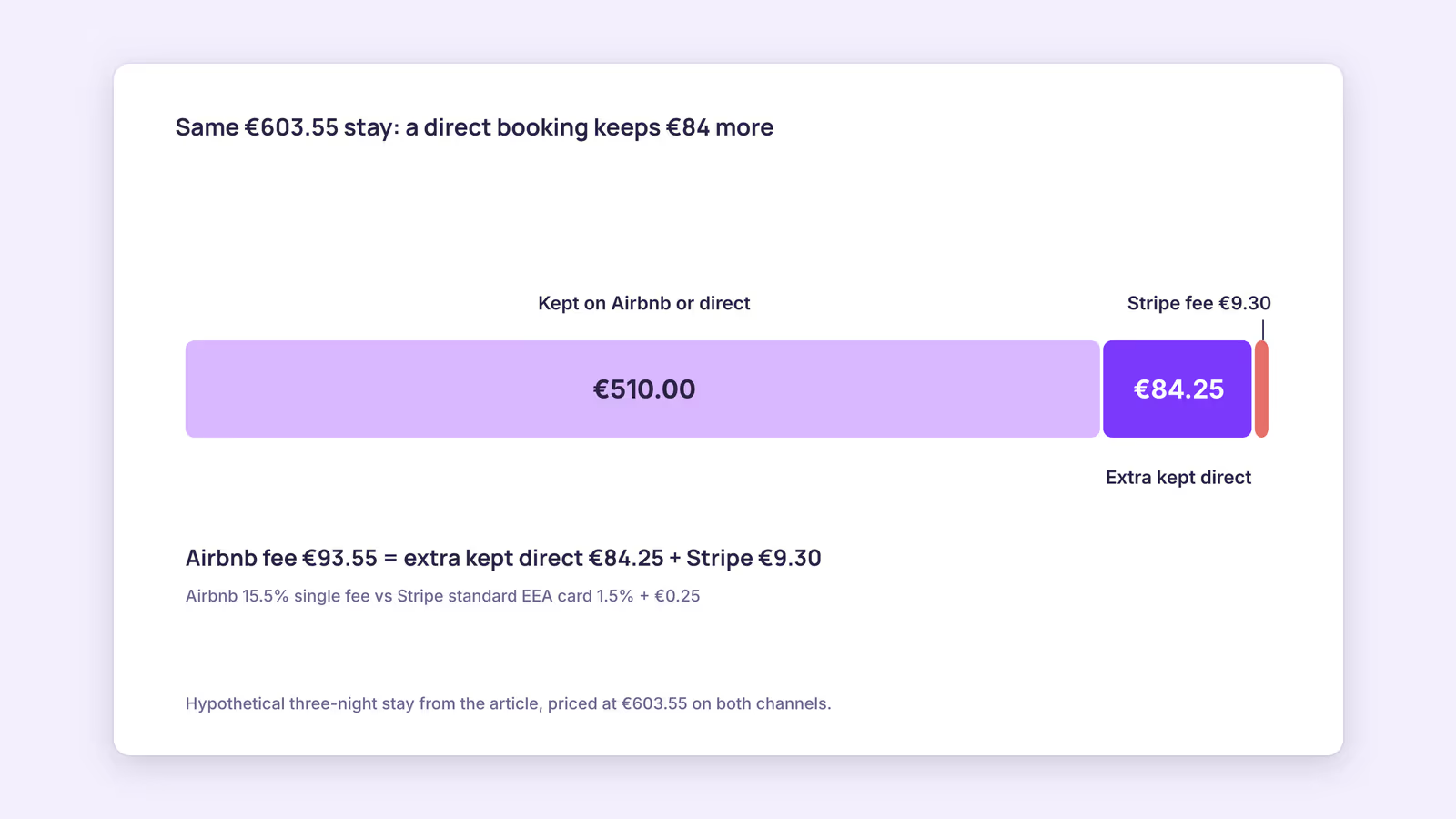
Here's a worked example. Consider a hypothetical three-night stay where you want to keep €510 after platform or payment fees. Inputs: Airbnb's single host fee of 15.5%, which Airbnb says most hosts on that structure pay; a Booking.com contract rate of 15% (an example only, since Booking.com says your rate depends on country, property type and agreement); and a standard EEA card on your direct site at Stripe's listed 1.5% + €0.25.
| Channel | Fee used | Price needed to keep €510 | Take-home if you charge €603.55 everywhere |
|---|---|---|---|
| Airbnb (single fee) | 15.5% | €603.55 | €510.00 |
| Booking.com (example rate) | 15% | €600.00 | €513.02 |
| Direct site, Stripe card | 1.5% + €0.25 | €518.02 | €594.25 |
Two things stand out. Airbnb and Booking.com land within a few euros of each other on these inputs, so full price parity between them costs you little. The direct booking at the same price keeps about €84 more than Airbnb, and that gap is the room you have to offer a lower direct price.
Swap in your own numbers before you act on this. Booking.com charges commission on fees such as cleaning and, in most countries, on VAT, and programmes like Preferred Partner add to your rate. Vrbo's booking fee article lists a 12% commission plus 3% payment processing on the total payment for pay-per-booking hosts. The OTA fee comparison puts the main channels side by side, and Booking.com commission explained covers what's commissionable.
Our recommendation: pick one rule and apply it consistently. Either keep public prices equal and accept different payouts, or mark up each OTA to protect the payout. Mixing the two, night by night, is where hosts lose track.
Can you offer a lower price on your direct booking website?
In the EEA, Booking.com can't contractually stop you, and the Commission names your own website as a channel where you may set different prices. Elsewhere, check your agreement first, then check each platform's rules on how you reach guests.
The price itself is only half of it. How you tell guests about the lower price has its own rules. Airbnb's off-platform policy bars links to outside booking sites, asking guests for contact details to book elsewhere, and offering discounts to move future or repeat bookings off Airbnb. So don't use Airbnb messages, listing text or photos to point guests to your site.
What's left is legitimate: your own website and search presence, returning guests who find you on their own, social profiles, and printed material you'd use anyway. How to get direct bookings covers traffic sources that don't rely on platform messaging.
A quick check before you set a direct discount:
- Is your property in the EEA, or does your Booking.com agreement allow different direct prices?
- Does your discount still leave the direct booking ahead of your best OTA take-home, after card fees?
- Are cancellation terms, deposits and house rules on your site at least as clear as on the platforms?
- Can guests find your site without you promoting it inside Airbnb or Booking.com messages?
When this advice does not apply
- Properties outside the EEA: the Commission's factsheet and Booking.com's statement cover the EEA. In the UK, US or elsewhere, your contract and local rules decide, so read your General Delivery Terms or ask your account manager.
- Hotels and multi-room properties: rate plans, room types and channel contracts get more complex, and this per-stay example won't cover them.
- Contracts with other OTAs or wholesalers: a separate agreement can have its own pricing terms. The DMA ban described here applies to Booking.com as a designated gatekeeper.
- Legal questions: this is general information, not legal advice. If a platform tells you your prices breach your agreement, get advice for your country.
What to do next
- Find your Booking.com agreement and confirm which General Delivery Terms apply to your property.
- Pull your real Airbnb fee and Booking.com commission rate from your latest payout and invoice.
- Run the listed-price formula for a typical stay on each channel.
- Choose one rule: equal guest prices or equal payouts. Write it down.
- If you offer a direct discount, promote your site only through channels that don't break platform rules.
FAQ
Does Airbnb require rate parity?
Airbnb's search ranking article compares your price with comparable listings in your area and doesn't mention prices on other websites. Its off-platform policy still limits how you can steer Airbnb guests to book elsewhere.
Is rate parity law the same everywhere?
No. The DMA's ban on parity requirements applies to designated gatekeepers like Booking.com in the EEA. Other countries and other platforms follow their own rules and contracts, so check the terms you signed.
Should my Airbnb and Booking.com prices be identical?
Only if that's your rule. On the example rates above, equal prices leave a gap of about €3 over three nights. With your actual rates the gap may be larger, so run your own numbers.
Direct booking widget: BookBed's embeddable booking widget takes direct reservations on your own website with Stripe checkout paid into your own Stripe account, with 0% BookBed commission, so a direct price can reflect card fees rather than OTA commission. See plans and start a free trial →
Sources
- European Commission, "Factsheet - How the DMA ensures businesses using Booking.com are free to set their prices on and off Booking.com" — Verified 2026-09-30
- Booking.com, "Facts on legal claims, class actions, Booking.com & parity" — Verified 2026-09-30
- Airbnb Help Center, "How search results work" — Verified 2026-09-30
- Airbnb Help Center, "Airbnb service fees" — Verified 2026-09-30
- Booking.com for Partners, "Understanding your commission" — Verified 2026-09-30