If you're asking "should I allow pets in my Airbnb?", the honest answer depends less on how much you like dogs and more on your floors, your building rules, your cleaner's schedule and who else uses the place. Before you tick the "pets allowed" box, spend ten minutes on the scorecard below. It tells you whether to say yes, say yes with limits, or keep a no-pets rule.
One thing is settled before you start: a no-pets rule doesn't apply to service animals on Airbnb, and in some places it doesn't apply to emotional support animals either. That's covered further down, because it changes how you word your policy.
This post is about the decision and the rules. If you've already decided and want to price it, read how to set a vacation rental pet fee. For marketing a pet-friendly listing, see the pet-friendly vacation rental strategy.
Should I allow pets in my Airbnb, or keep a no-pets rule?
Allow pets when your property can absorb extra hair, wear and cleaning time without hurting the next guest's stay, and when no lease, building rule or allergy in your household forbids it.
The upside is simple: a pet-friendly listing is open to travelers who won't leave their animal at home, and you can set rules and a fee instead of discovering an unannounced dog after checkout. The downside is extra turnover work, some added wear, and the risk that the next guest has an allergy.
We don't cite a percentage for how many more bookings pets bring, because we couldn't find a current primary source for one. Treat any figure you see without a source as a guess.
The pet-readiness scorecard
Score each row 0, 1 or 2. Add them up.
| Factor | 0 points | 1 point | 2 points |
|---|---|---|---|
| Flooring | Wall-to-wall carpet | Mix of rugs and hard floors | Tile, vinyl plank or sealed wood |
| Building or lease rules | Pets banned or unclear | Allowed with conditions | Explicitly allowed |
| Your own household | Someone with severe allergies stays there | Occasional personal use | Never used personally |
| Cleaning capacity | Same-day turnovers with no slack | Some same-day turnovers | Cleaner can add time when needed |
| Outdoor space | None, busy road outside | Shared green space nearby | Fenced yard or garden |
| Furniture | Light fabric sofas, delicate pieces | Mixed | Wipeable or covered upholstery |
How to read your score:
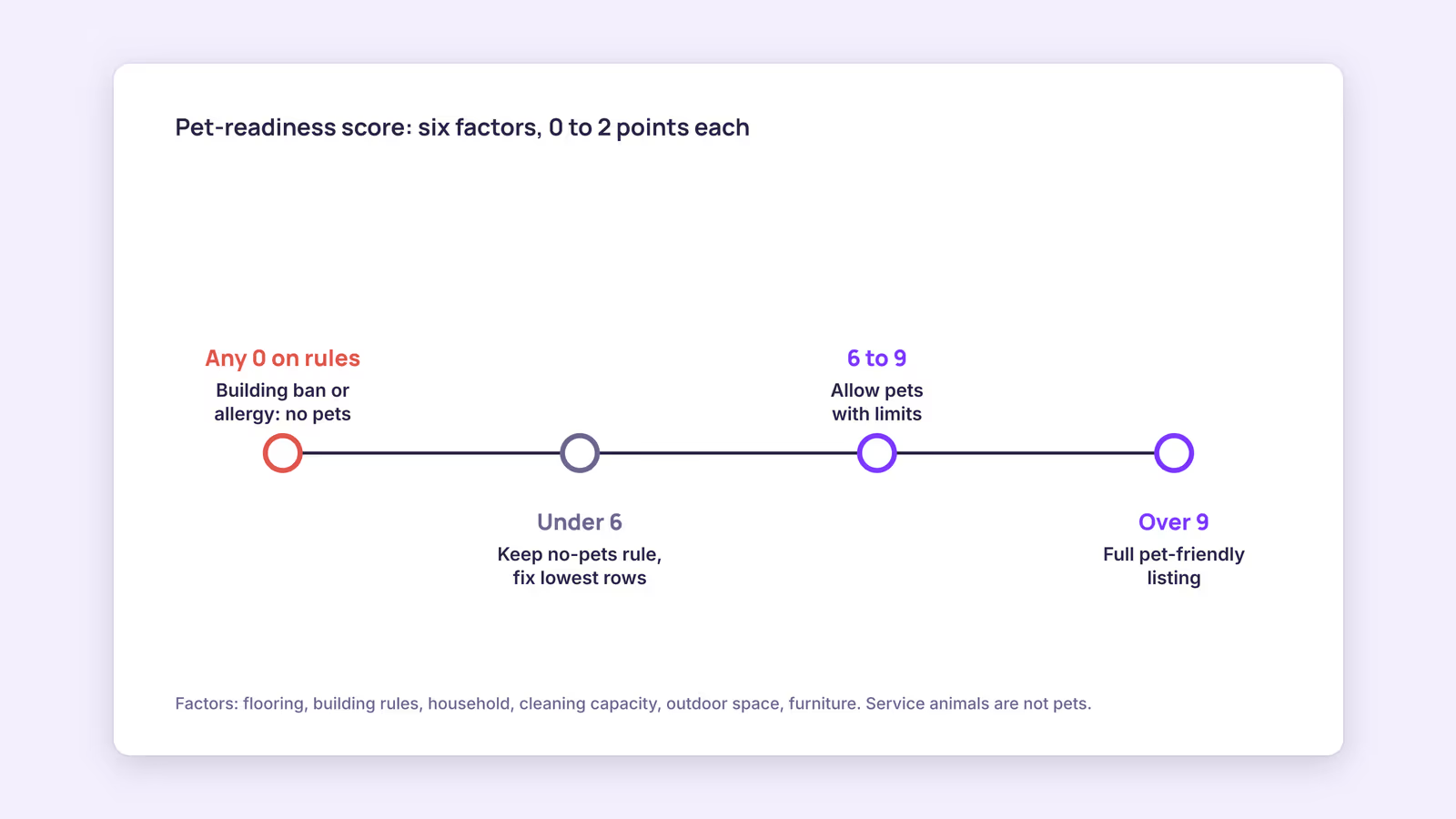
- 0 on building rules or household allergies: don't allow pets, whatever the total.
- Under 6: keep a no-pets rule for now and fix the lowest-scoring rows first.
- 6 to 9: allow pets with limits, such as one dog, a size cap and no stays shorter than your cleaner can handle.
- Over 9: you're a good candidate for a full pet-friendly listing.
Consider a hypothetical one-bedroom apartment with tile floors (2), a building that allows pets with conditions (1), no personal use (2), frequent same-day turnovers (0), a park nearby (1) and fabric sofas (0). That's 6: a yes with limits, and the first fixes are sofa covers and blocking same-day turnovers after pet stays.
What does Airbnb's service animal policy mean for hosts?
On Airbnb, a service animal is not a pet: you generally can't refuse the guest, charge pet or animal-cleaning fees, or apply different house rules because of it, even with a no-pets listing.
That's from Airbnb's Accessibility Policy. The same policy defines a service animal as generally a dog individually trained to do work or perform tasks for a person with a disability. Airbnb limits you to two questions:
- "Do you require your animal because of a disability?"
- "What work or task has the animal been trained to perform?"
You can't ask for documentation, ask the guest to describe the disability, or ask the dog to demonstrate its task. Guests don't have to disclose a service animal before booking. Airbnb may grant an exemption in limited cases, for example when the animal is a direct threat to the health of a host who lives in the listing, but you have to request it proactively.
Airbnb's Nondiscrimination Policy also lists charging pet fees for a service animal as a prohibited practice.
What about emotional support animals?
Airbnb's emotional support animal policy depends on location. The Accessibility Policy says that, unless otherwise prohibited, you may charge normal pet fees or decline if you don't accept pets. Where law or the policy requires you to accommodate emotional support animals, the same protections as service animals apply. Check your local rules before you write a blanket statement about "support animals" in your listing.
Our recommendation: don't write "no animals of any kind" in your house rules. Write "no pets" and add a line that service animals are welcome under Airbnb's policy.
How should you handle pet damage on Airbnb?
Document the condition of your home before every pet stay, then treat damage through Airbnb's own process rather than private demands, because AirCover for Hosts only reimburses what you can show.
Airbnb's AirCover for Hosts page says damage protection can reimburse certain damage a guest causes if they don't pay for repairs, and in certain cases covers specialized cleaning, naming pet accidents as an example. The detailed conditions and limits are in the Host Damage Protection Terms, so read those before relying on them. Our Airbnb Resolution Center guide walks through the request itself.
Airbnb's ground rules for guests help you set expectations: guests shouldn't bring pets into a no-pets listing, bring more pets than approved, or fail to tell you about a pet. The same page says cleaning fees are only meant for standard cleaning, and guests shouldn't leave stains from pets that need deep cleaning.
Practical steps that keep claims simple:
- Take dated photos of floors, doors and upholstery at each turnover.
- Keep receipts for anything you replace.
- Ask your cleaner to note pet-related extra work and time.
- Report issues promptly instead of waiting for the next stay.
How do you write an Airbnb host pet policy guests will follow?
A pet policy works when it's specific: how many animals, which kinds, where they can go, what happens when they're left alone, and what the guest must do before checkout.
Here's an Airbnb pet rules example you can adapt. Replace the bracketed items and check each rule against your local law and Airbnb's policies before publishing.
Pet policy
- Number and type: up to [one] dog under [size or weight]. Please tell us about your pet when you book.
- Pet fee: a pet fee of [amount] per stay applies. It doesn't apply to service animals.
- Furniture: pets stay off beds. Please use the provided covers on sofas and bring your pet's own bed.
- Alone time: please don't leave your pet alone in the home unless it's crated.
- Outside: pick up after your pet in the yard and on walks.
- Service animals: welcome under Airbnb's Accessibility Policy, with no pet fee.
Keep the list short. Guests skim, and each rule you add is one more thing to enforce. Put the same wording in your listing description; our guide to writing an Airbnb listing description covers where it fits.
When this advice does not apply
- Rentals under a lease or HOA: your lease, building or association rules override anything here. Check them first.
- Outside Airbnb: Booking.com, Vrbo and direct bookings have their own pet settings and fee rules. The service animal rules above are Airbnb's policy; local law may add to them.
- Legal questions: this is operational guidance, not legal advice. Assistance animal law varies by country and state.
What to do next
- Score your property with the scorecard and write down the lowest two rows.
- Check your lease, building or HOA rules for pet restrictions.
- Reword your house rules to say "no pets" or set pet limits, and add the service animal line.
- Set up a photo routine for turnovers so any damage request has evidence.
- If you say yes, decide your fee using the pet fee guide.
FAQ
Can an Airbnb host charge a pet fee for a service animal?
No. Airbnb's Accessibility Policy says hosts can't charge pet fees or cleaning fees for animal hair or dander because of a service animal.
Can an Airbnb host change the pet policy after booking?
Airbnb's ground rules hold guests to the pet approvals in the house rules. Changing rules for an existing booking isn't something to do unilaterally; message the guest and agree changes in writing through Airbnb.
Can I refuse a guest because I'm allergic to dogs?
Only for pets. For service animals, Airbnb may grant an exemption in limited cases, such as when the animal is a direct threat to the health of a host living in the listing, and you must request it proactively.
About BookBed: If you take direct bookings, BookBed's embeddable booking widget takes payment through Stripe checkout into your own Stripe account, so guests read your pet rules and pay before they arrive. See pricing
Sources
- Airbnb Help Center, "Accessibility Policy" — Verified 2026-09-30
- Airbnb Help Center, "Nondiscrimination Policy" — Verified 2026-09-30
- Airbnb Help Center, "Ground rules for home guests" — Verified 2026-09-30
- Airbnb Help Center, "Getting protected through AirCover for Hosts" — Verified 2026-09-30
- Airbnb Help Center, "Host Damage Protection Terms" — Verified 2026-09-30