If you're asking "how much should I charge for Airbnb?", you probably have two numbers in your head: what nearby listings charge and what you hope to earn. Beginners usually start with the first one. Start with a third number instead: the lowest nightly price at which a booked night doesn't lose you money.
Your first action today: open a spreadsheet and list every monthly cost of the unit, then every cost that happens once per stay. That list turns pricing from a guess into a range with a floor you won't cross.
This guide covers that floor. If you want the ongoing tactics (seasons, weekends, gap nights), read our Airbnb pricing strategy guide. If your listing has zero reviews, the launch-discount question is covered in how to price a new Airbnb listing.
How does Airbnb pricing work for a new host?
You set a nightly price and any host fees, such as a cleaning fee, and Airbnb deducts its service fee from your payout while guests may pay their own fee on top, depending on your fee structure.
Airbnb's service fee article describes two structures. Under the single-fee structure, the whole fee comes out of the host's payout: most hosts pay 15.5%, others typically 14% to 16%, and listings in Brazil and Mexico pay 16%. The older split fee, where most hosts pay 3% and guests pay a separate fee, is being phased out. The fee is calculated on the nightly price plus host fees like cleaning, not on taxes.
So "what percentage does Airbnb take" has a practical answer for pricing: assume roughly 15.5% of the nightly price and cleaning fee under the single fee, and check your own listing's payout settings. This suggests you shouldn't compare your costs against the price shown on your listing. Compare them against what's left after the fee.
Price also affects where you appear. Airbnb's search results article says the algorithm weighs total price against comparable listings in the area for the same dates, and listings priced below similar listings tend to rank higher. That's a reason to know your floor precisely: it tells you how far below the market you can safely go.
How much should I charge for Airbnb to break even?
Divide your monthly fixed costs by the nights you realistically expect to book, add per-night and per-stay costs, then divide by one minus Airbnb's fee rate. The result is your break-even nightly floor.
Here's the formula with the inputs shown:
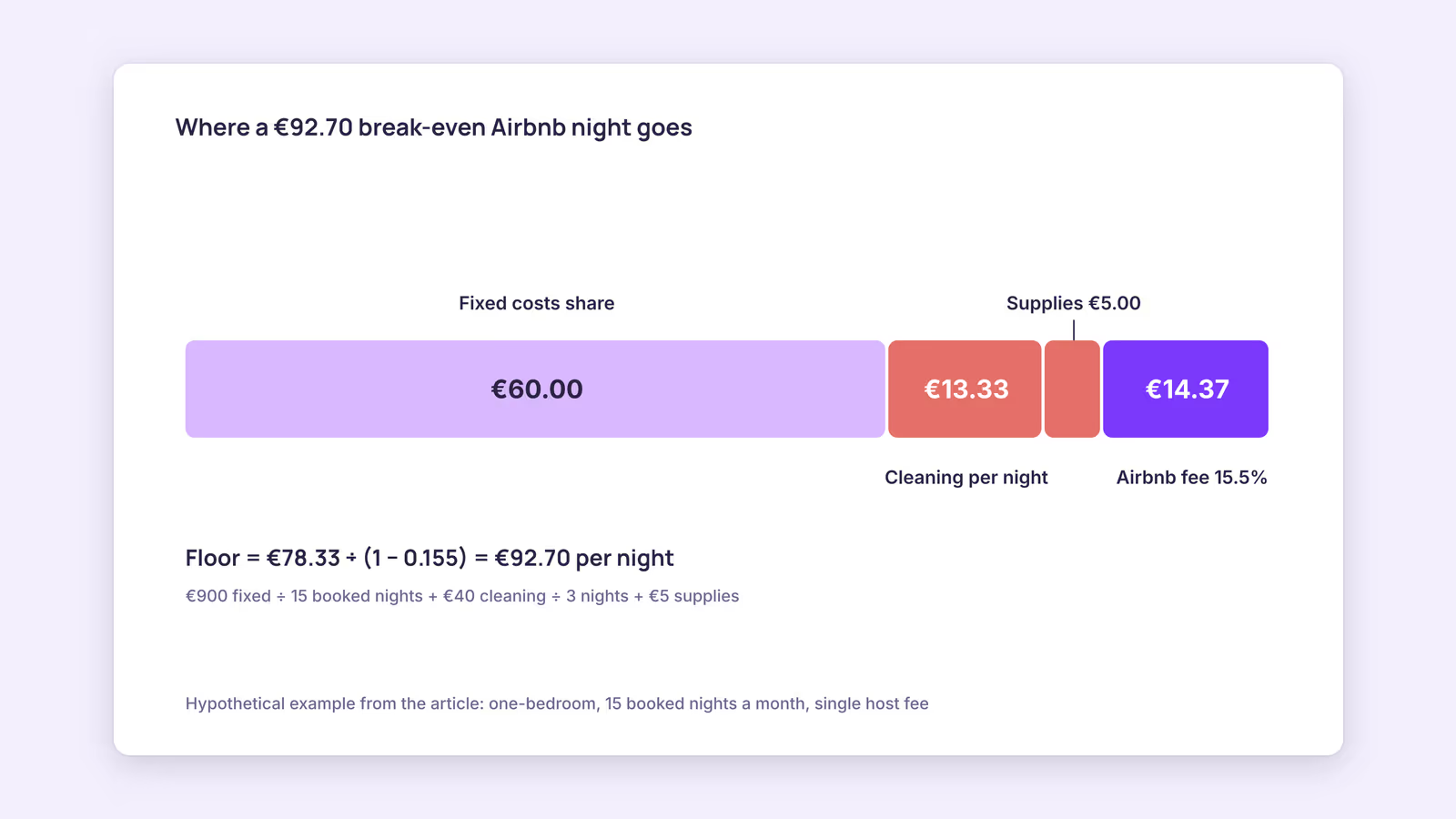
Floor = (fixed costs ÷ booked nights + cleaning cost ÷ average stay + supplies per night) ÷ (1 − fee rate)
Consider a hypothetical one-bedroom apartment. These numbers are placeholders; swap in your own.
| Input | Hypothetical value | Per booked night |
|---|---|---|
| Fixed monthly costs (rent or mortgage share, utilities, internet, insurance, software) | €900 | €900 ÷ 15 nights = €60.00 |
| Nights you expect to book per month | 15 | — |
| Cleaning and laundry per stay | €40 | €40 ÷ 3-night average stay = €13.33 |
| Supplies (coffee, toiletries, paper goods) | €5 per night | €5.00 |
| Cost per booked night before fees | — | €78.33 |
| Airbnb host fee (single fee, 15.5%) | — | €78.33 ÷ 0.845 = €92.70 |
Your floor in this example is about €93 a night. At €92.70, Airbnb's 15.5% (€14.37) comes off, and €78.33 is left to cover costs. Any night sold below that loses money; any night above it contributes profit.
Three things beginners get wrong with this math:
- Using an optimistic occupancy. If you plug in 25 booked nights when 15 is realistic, the fixed-cost share drops from €60 to €36 and your floor looks far lower than it is. Use a conservative guess for the first months and revise it with real data.
- Forgetting the fee applies to cleaning too. If you charge guests a cleaning fee instead of building cleaning into the nightly price, the fee still applies to it, so a €40 cleaning fee under the single fee leaves you about €33.80.
- Ignoring short stays. Cleaning cost per night rises as stays get shorter. A one-night stay in this example carries the full €40 cleaning cost, which pushes that night's floor to roughly €124.
To check the fee side against your own numbers, run them through our Airbnb fee calculator.
Should you build cleaning into the nightly rate or charge a cleaning fee?
Either works mathematically, but a separate cleaning fee covers short stays better, while folding it into the nightly rate keeps the total cleaner for longer stays. Pick based on your typical stay length.
Airbnb's search looks at total price, not just the nightly figure, so a cleaning fee isn't a way to look cheaper in search. What it changes is who carries the cost. With a flat fee, a one-night guest pays the same €40 as a seven-night guest, which matches your actual cost. Built into the nightly rate, the seven-night guest overpays and the one-night guest underpays.
Our recommendation: if most of your bookings are three nights or fewer, keep a separate cleaning fee sized to your real cleaning cost. If most are a week or longer, consider folding it into the nightly rate. Either way, don't pad it to make the nightly price look lower; guests see the total. Our glossary entry on the cleaning fee covers the basics.
How do you price your Airbnb above the floor?
Once you know your floor, find five to eight listings that match yours on location, guest capacity and core amenities, check their prices for the same dates, and set your base price between your floor and their typical rate.
Search Airbnb as a guest, with your guest count and dates, in a private browser window. Ignore listings that sleep more people or have amenities you don't (a pool, parking, sea view). Note each comparable's nightly price for a normal weekday in an ordinary month, and for a weekend.
Then compare:
| What you find | What it means | What to do |
|---|---|---|
| Comparables well above your floor | You have room | Price near the middle of the comparables; you can go slightly under while you build reviews |
| Comparables close to your floor | Thin margin | Cut costs, target longer stays, or accept a smaller profit per night |
| Comparables below your floor | This unit loses money at market rates | Revisit costs and occupancy before listing; pricing alone won't fix it |
If you use Airbnb's Smart Pricing, its help article says you enter a minimum and maximum price, and you can override individual nights with custom pricing. Set the minimum at or above your floor. The article also notes that discounts such as early-bird offers can take the price guests pay below your Smart Pricing minimum, so check discounted nights against the floor too.
Wondering how to change the price on an Airbnb listing? On desktop, the same article points to Calendar, then Price settings, under Base price. Changes don't affect pending or confirmed reservations.
When this advice does not apply
The break-even floor assumes you're covering real costs. If the unit is your own home rented for a few weekends a year, most fixed costs exist anyway, so your floor may be close to cleaning and supplies alone. If you're in a market with strict night caps or registration rules, your realistic booked nights are set by regulation, not demand, so use that cap in the formula. And if your listing is on the split-fee structure, use your actual host fee percentage instead of 15.5%.
What to do next
- List your fixed monthly costs and per-stay costs, and pick a conservative booked-nights estimate.
- Calculate your floor with the formula above, using the fee rate shown in your Airbnb payout settings.
- Price five to eight true comparables for a normal weekday and a weekend, and place your base price between your floor and their middle.
- Set any Smart Pricing minimum at or above your floor, and check discounted nights against it.
- After your first month, replace the booked-nights guess with real data and recalculate.
FAQ
What percentage does Airbnb take from hosts?
Under the single-fee structure, most hosts pay 15.5% of the nightly price plus host fees, with others typically paying 14% to 16%. Hosts still on the split fee usually pay 3%, while guests pay a separate fee. Check the current figures in Airbnb's service fee article.
How much should I charge for an Airbnb cleaning fee?
Start from what one turnover actually costs you: cleaner, laundry and consumables. Remember the host fee applies to the cleaning fee too, so a fee set exactly at cost leaves you slightly short.
Can I charge less than my break-even floor?
You can, for a specific reason such as filling a single gap night, but treat it as a deliberate loss. A base price under your floor means every normal booking loses money.
About BookBed: If you also take direct bookings, BookBed's seasonal pricing rules let you set date-range prices for your BookBed calendar and booking widget, so direct guests see rates that respect the floor you worked out. These rules apply to BookBed and aren't pushed to Airbnb. See BookBed plans
Sources
- Airbnb Help Center, "Airbnb service fees" — Verified 2026-09-30
- Airbnb Help Center, "How search results work" — Verified 2026-09-30
- Airbnb Help Center, "Use Smart Pricing to automatically adjust your prices based on demand" — Verified 2026-09-30
- BookBed, "Documentation" (seasonal pricing rules) — Verified 2026-09-30