You pay a platform fee on every Airbnb or Booking.com stay, and you've started wondering whether taking bookings on your own site is worth the effort. It can be, but a direct booking channel is a small business of its own: it needs a way to take payment, a calendar that can't double-book, and a reason for guests to find you.
Your first action today: open last year's payout reports and write down, per platform, the total fees you paid and how many stays came from guests who had stayed before or were referred by someone who had. Those two numbers tell you how much a direct channel could save and how many guests could realistically use it.
What does direct booking mean for a vacation rental host?
A direct booking is a reservation a guest makes with you through your own website, booking page or phone, so no online travel agency takes a commission or sets the terms of that stay.
That shifts the jobs a platform normally does onto you. With a direct booking you set the cancellation policy, collect the payment, answer disputes and hold the guest's contact details. You also lose what the platform provides, such as its search traffic, its review system and its guest-facing support.
Our recommendation: treat direct booking as an addition to your OTA listings, not a replacement. Platforms are where most new guests discover you. A direct channel is most useful for the guests who already know you.
What are the direct booking benefits, in real numbers?
The main benefit is a lower fee per stay: platform service fees or commission are replaced by card processing, which is usually a much smaller percentage but still not zero.
Here's what each channel takes, from the platforms' own help pages:
- Airbnb: under the single-fee structure, most hosts pay 15.5% of the nightly price plus host fees such as cleaning. The older split fee (3% for most hosts, with guests paying a separate fee) is being phased out, and you can't switch back once migrated.
- Booking.com: the commission is a percentage of the total booking amount, including fees like cleaning. The rate depends on your country, property type and agreement, so check your own contract rather than a published average.
- Direct via Stripe: Stripe's Ireland pricing lists 1.5% + €0.25 for standard EEA cards and 2.8% + €0.25 for premium EEA cards. Rates differ for non-EEA cards and other countries.
Worked example: one €600 stay
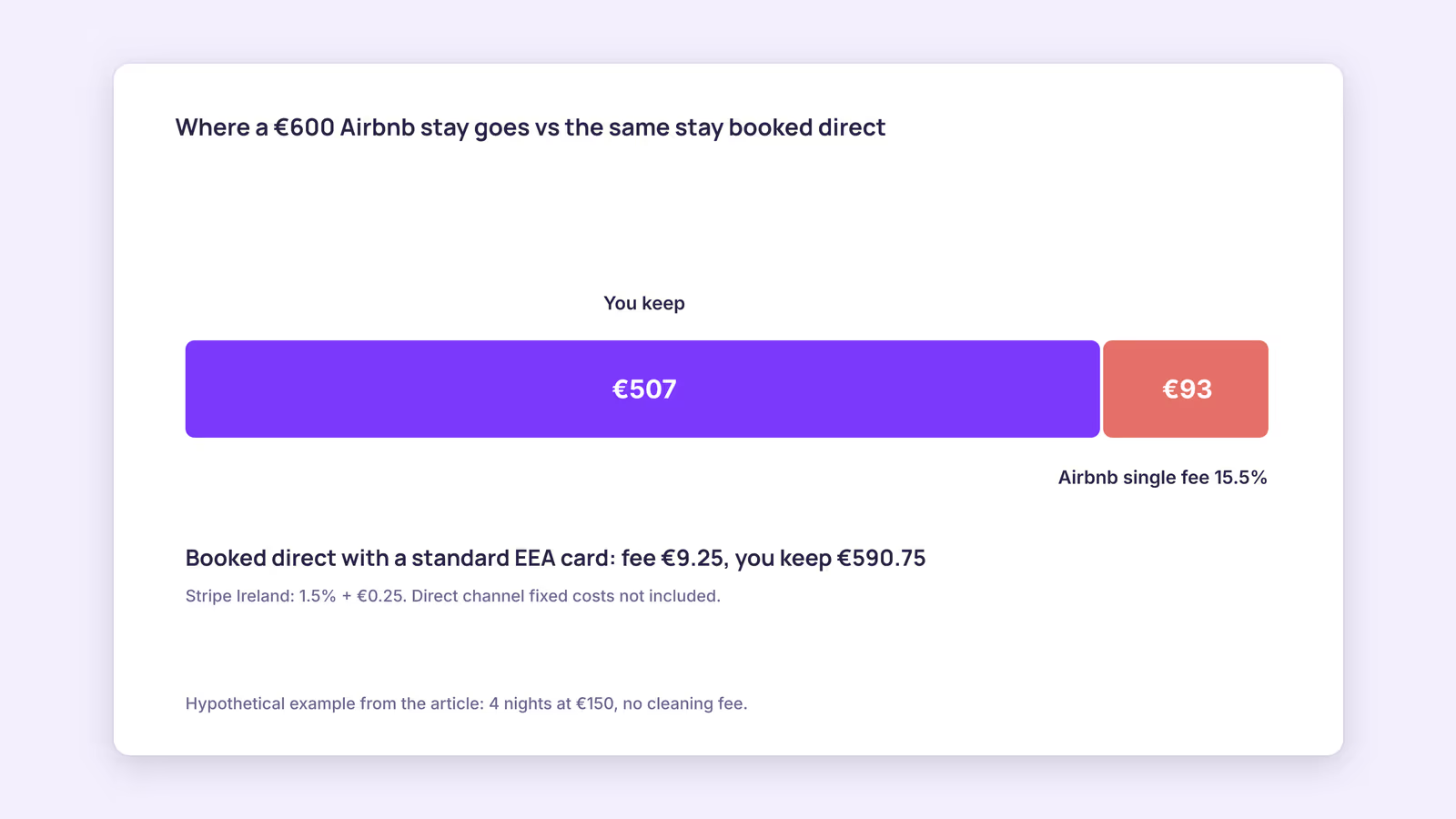
Consider a hypothetical four-night stay at €150 per night, €600 in total, with no cleaning fee.
| Channel | Fee inputs | Fee on €600 | You keep |
|---|---|---|---|
| Airbnb, single fee | 15.5% of €600 | €93.00 | €507.00 |
| Direct, standard EEA card | 1.5% of €600 + €0.25 | €9.25 | €590.75 |
| Direct, premium EEA card | 2.8% of €600 + €0.25 | €17.05 | €582.95 |
So a direct stay keeps roughly €76 to €84 more on this booking. You can rerun the Airbnb side with your own prices in the Airbnb fee calculator.
Two caveats before you multiply that by every booking. First, a direct channel has fixed costs: a website, booking software and your time. Second, the saving only counts on stays that would have happened anyway. If a direct guest would otherwise have booked on Airbnb, you gain the difference. If a direct listing brings no one new and no one switches, you gain nothing and still pay the fixed costs.
A simple break-even check: divide your yearly direct-channel costs by the saving per stay. If your fixed costs were €300 a year, this example suggests you'd need about four direct stays a year to cover them. Plug in your own costs and average stay value.
The other benefits are harder to price. You hold the guest's contact details for stays booked with you, you choose your own cancellation terms, and you're less exposed if a platform changes its fees or ranking.
Direct bookings vs Airbnb: which guests can you move, and how?
You can offer direct booking to guests who find you outside Airbnb, but you can't use Airbnb's messages or a guest's Airbnb stay to move future bookings off the platform.
Airbnb's Off-Platform and Fee Transparency Policy prohibits sharing links to book elsewhere, asking guests for an email address or other contact channel through Airbnb messaging, and offering discounts to move future or repeat bookings off Airbnb. A "book direct next time for 10% off" card aimed at Airbnb guests risks breaking those rules, so leave it out.
That narrows your realistic sources of direct guests to:
- Guests who booked direct before. Their details are yours to use within privacy law, so a returning-guest email is fair game.
- Referrals from those guests, friends and local contacts.
- People who find your own site, through search, social media or a link you share outside the platforms.
- Groups and longer stays that ask you directly by phone or email.
One commonly repeated tip doesn't hold up: Google's Business Profile eligibility rules list vacation homes among rental properties that aren't eligible for verification. Don't plan your direct channel around a Google Maps listing for the rental itself.
For more ways to reach these guests, see how to get direct bookings.
How do you set up a direct booking website for a vacation rental?
A working setup needs four parts: a page guests can find, a way to see live availability and pay, a calendar connection to your platforms, and written terms for cancellations and damage.
Use this checklist before you share the link with anyone:
| Part | Check before launch | What goes wrong without it |
|---|---|---|
| Booking page | Photos, house rules, location, total price shown before payment | Guests message you instead of booking, or drop off at checkout |
| Availability and payment | Guests pick dates and pay in one flow, with a confirmation email | You confirm by hand and dates stay open while you wait |
| Calendar connection | Direct stays export to Airbnb and Booking.com, and their bookings import back | A direct booking stays sellable on a platform |
| Terms | Cancellation, refund, deposit and damage rules on the page and in the confirmation | Disputes with nothing written to point to |
| Guest communication | Pre-arrival details and a contact number | Late questions and missed check-ins |
The calendar row deserves extra care. Many small setups connect through iCal sync, and each platform fetches your calendar on its own schedule. Airbnb says it updates connected calendars every 3 hours, so a direct booking can stay open on Airbnb for a while after the guest pays. In peak weeks, block the dates by hand on each platform as soon as a direct booking lands. If you've seen that problem already, why direct booking dates stay open on Airbnb covers the fixes.
For page layout and platform choices, the guide to building a direct booking website goes step by step.
When this advice does not apply
- You have no repeat or referral guests yet. A direct channel mostly captures guests who already know you. A new listing may do better improving its platform performance first.
- You run hotel-style inventory. Properties with many identical rooms often need a channel manager connected through APIs, which works differently from the iCal setup described here.
- Your local rules differ. Tourist tax, registration and consumer-protection rules on refunds vary by country and city. Check them before you write your terms.
- Your platform fee structure differs. If you're still on Airbnb's split fee or have a special Booking.com agreement, redo the worked example with your own rates.
What to do next
- Total last year's platform fees and count stays from repeat or referred guests.
- Rerun the worked example with your average stay value and your card mix.
- Write your cancellation, deposit and damage terms before building anything.
- Set up the booking page and calendar connection, then test with a far-future booking to see how long each platform takes to block the dates.
- Email past direct guests only, and never use Airbnb messages to move bookings off the platform.
FAQ
Can I take direct bookings without a website?
Yes. Some hosts share a booking link or take reservations by email and bank transfer. A hosted booking page with card payment makes it easier to confirm dates and collect money in one step.
Will a direct booking channel affect my Airbnb ranking?
Airbnb's search ranking article describes factors from your listing and your guests' activity on Airbnb. It doesn't list off-platform bookings as a factor, but it doesn't say they're excluded either. Breaking the off-platform policy is a separate risk.
Do I need separate insurance for direct bookings?
Check with your insurer. Platform protection programs are tied to bookings made on that platform, so confirm in writing that your policy covers guests who book you directly.
About BookBed: BookBed's direct booking widget embeds on your own site so guests can check availability and pay by card through Stripe checkout into your own Stripe account, with no BookBed commission on the booking. It won't bring traffic on its own, so it fits hosts who already have guests asking to book direct. See the booking widget
Sources
- Airbnb Help Center, "Airbnb service fees" — Verified 2026-09-30
- Booking.com for Partners, "Understanding your commission" — Verified 2026-09-30
- Stripe, "Pricing" (Ireland) — Verified 2026-09-30
- Airbnb Help Center, "Off-Platform and Fee Transparency Policy" — Verified 2026-09-30
- Google Business Profile Help, "Business eligibility and ownership guidelines" — Verified 2026-09-30