You're paying platform fees on every stay, and you'd like some guests to book with you instead. The hard part isn't building a booking page. It's knowing which guests you're actually allowed to reach, what a direct stay is worth to you, and what has to work before you send anyone there.
Start with one number before anything else: your take-home on a typical recent stay from your Airbnb or Booking.com statement. Every decision below, from your direct price to whether a discount makes sense, compares against it.
What are you allowed to do with guests who booked on Airbnb?
Very little if the goal is moving them off Airbnb, because its policy bars off-platform links, asking guests for their email, and encouraging future or repeat bookings elsewhere, including with discounts.
That's worth reading slowly, because a lot of direct-booking advice gets it wrong. Airbnb's Off-Platform and Fee Transparency Policy lists these as prohibited for hosts:
- "Including links that take people off of the Airbnb platform in listings or messages"
- "Asking or encouraging users to move current, future, or repeat bookings... off of Airbnb"
- "Offering or soliciting discounts to book off of Airbnb"
- Soliciting guests' email, mailing address or other channels, and using guest contact information for marketing
So a "book direct next time for 10% off" line in your Airbnb welcome message or house manual breaks the rules. So does collecting Airbnb guests' emails for a follow-up campaign. The narrow exception is contact information you're legally required to collect, disclosed in your listing beforehand.
Booking.com has its own partner terms. Read your agreement before you message Booking.com guests about any other channel.
Our recommendation: treat OTA guests as off-limits for direct marketing, and build your direct channel from sources you own. Someone who finds you independently and books direct is your guest, and you can build a relationship from there.
Where do direct bookings actually come from?
Direct bookings come from people who find you outside the platforms: past direct guests, people searching your property's name, referrals, local partners, and your own content. OTAs are still where most new guests discover you.
Here's a diagnostic for the channels hosts usually consider. Use it to pick two you can run well, not all of them.
| Channel | Who it reaches | Rule or eligibility check | Effort to start |
|---|---|---|---|
| Your own booking page | Anyone who searches your property or brand name | None beyond payment and data-protection rules in your country | Medium |
| Guests who booked direct before | People already in your own records | Ask for marketing permission at booking and follow your local email rules | Low |
| Friends, family and word of mouth | Personal networks of past direct guests | None | Low |
| Local businesses (tour operators, restaurants, event venues) | Visitors already planning a trip to your area | Agree terms in writing if you pay referral fees | Medium |
| Social media and your own content | People who follow the area or your property | Platform terms on promotions | Ongoing |
| Google Business Profile | Local search on Maps | Vacation homes are listed as ineligible; a staffed rental office may qualify | Varies |
That last row surprises people. Google's business eligibility guidelines name "rental or for-sale properties such as vacation homes" as ineligible, while "sales or leasing offices" are eligible. If you run a staffed office where guests check in, that office may qualify. A single apartment usually won't.
What this suggests: for most small hosts, the realistic engine is a clean booking page that people land on when they search your property name, plus the guests who book direct and come back. Our repeat guest strategy covers the second part in detail, and how to build a direct booking website covers the first.
How much is a direct booking worth compared with an OTA booking?
A direct booking is worth roughly the full price the guest pays you minus card processing fees, which is usually far less than an OTA's host fee. Compare that with your OTA take-home, and the gap tells you how much room you have for a direct-booking price or perk.
Use this formula:
Direct take-home = guest price − (card fee % × guest price) − fixed card fee
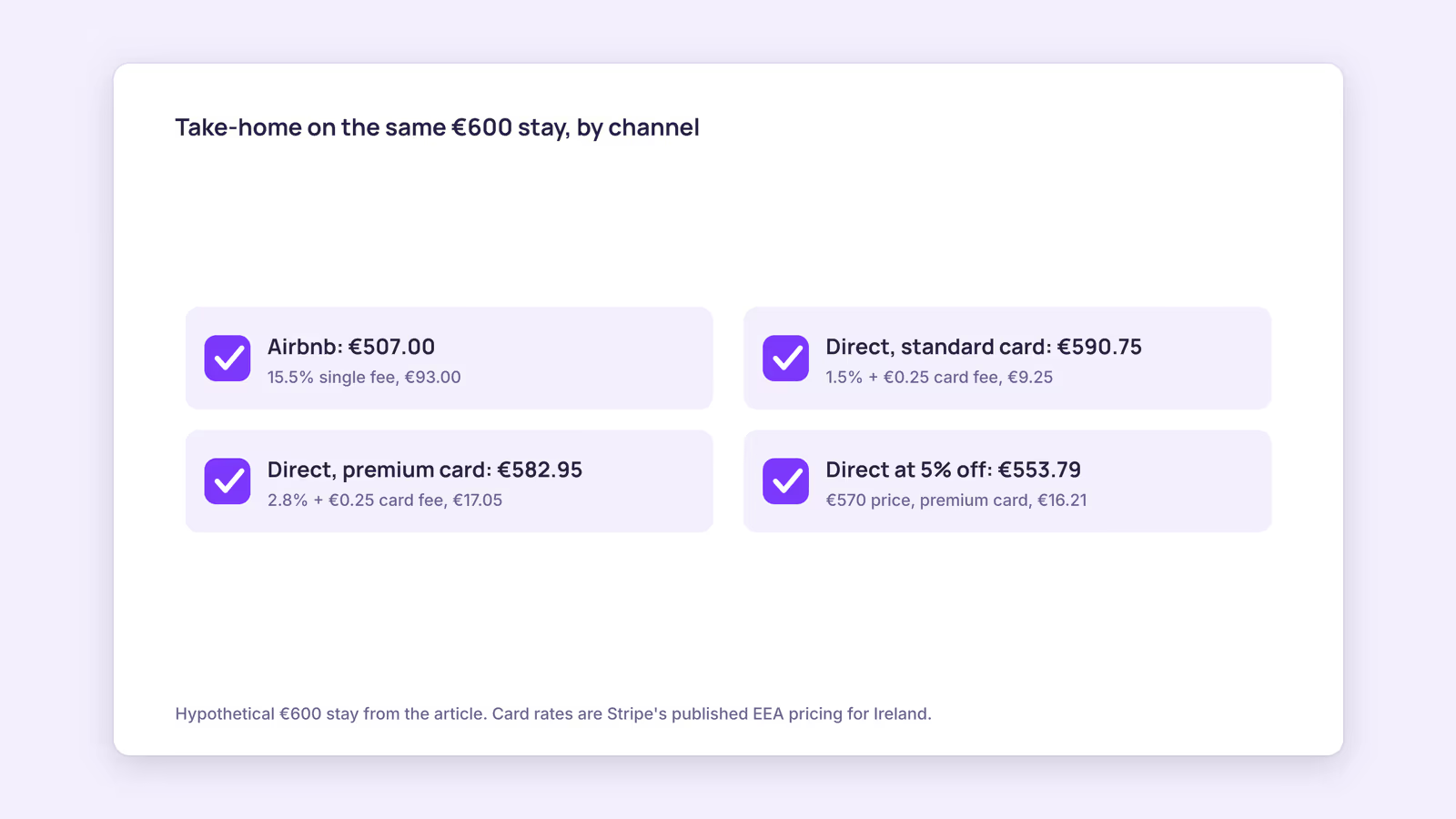
Here's a worked example. Consider a hypothetical €600 stay (nightly rate plus cleaning). Airbnb's service fee article says most hosts on its single fee structure pay 15.5%. For the direct side, Stripe's published pricing for Ireland lists 1.5% + €0.25 for standard EEA cards and 2.8% + €0.25 for premium EEA cards. Rates differ by country, so check your own.
| Scenario | Guest pays you | Fee | Your take-home |
|---|---|---|---|
| Airbnb, 15.5% single fee | €600 before Airbnb deducts its fee | €93.00 | €507.00 |
| Direct, standard EEA card | €600 | €9.25 | €590.75 |
| Direct, premium EEA card | €600 | €17.05 | €582.95 |
| Direct at 5% off, premium EEA card | €570 | €16.21 | €553.79 |
On these inputs a direct stay keeps roughly €75–€85 more than the Airbnb booking, and even a 5% direct price leaves a margin. Run your own numbers with the Airbnb fee calculator, since your fee structure may differ.
Two things the table doesn't show. First, the OTA fee also buys discovery, payment handling, guest messaging and a support process. On a direct booking, handling disputes, damage and cancellations is on you. Second, card disputes and refunds carry their own costs. Our recommendation: price direct stays so your take-home beats the OTA, but don't cut so deep that one refund wipes out the margin.
What does your setup need before you promote it?
Your booking page needs live availability, instant payment, clear policies, and a calendar that blocks the other channels quickly. Promote it before these work and you risk double bookings and abandoned checkouts.
Work through this checklist before you share the link anywhere:
- Guests can book and pay in one go. An inquiry form adds a round of email before the guest commits. Aim for choose dates, see the total, pay, get a confirmation.
- The total price is visible up front. Show cleaning fees and any taxes you collect before checkout.
- Your cancellation and damage terms are written down. Put them on the page and in the confirmation email. There's no platform policy to fall back on.
- Payment goes to an account you control, and you know how refunds work in that system.
- A direct booking blocks the dates on your OTAs. If you use iCal, the platforms fetch your calendar on their own schedule. Airbnb says it updates from connected calendars every 3 hours. A dates-open window is real, so see why direct-booked dates can stay open on Airbnb for how to handle it.
- You ask direct guests for marketing permission. Get clear consent at checkout if you want to email them about future stays, and follow your country's email-marketing rules.
- The page loads on a phone. Test it on mobile data, not your home Wi-Fi.
When this advice does not apply
- Hosts outside the EEA: the Stripe rates above are for Ireland. Card fees differ by country and card type.
- Hosts in Brazil and Mexico: Airbnb publishes different host fees there.
- Hotels and staffed properties: Google Business Profile eligibility and your OTA contracts may differ from the small-host picture above.
- Hosts under a Booking.com or Vrbo contract with special terms: your agreement governs what you can say to those guests, not this article.
What to do next
- Pull your take-home from a recent OTA stay and run it against the direct formula above.
- Remove any off-platform links or "book direct" offers from your Airbnb listing, messages and house manual.
- Work through the setup checklist and fix any item that fails.
- Pick two channels from the diagnostic table that you can keep up for six months.
- Add a marketing-permission checkbox to your direct checkout so returning guests can hear from you.
FAQ
Can I leave a "book direct" card in the property for Airbnb guests?
Airbnb's policy bars encouraging repeat bookings off the platform, which a "book direct" card in the property would do. Read the full policy before trying any in-stay promotion.
Do I need my own website for direct bookings?
You need a page where guests can see availability and pay. That can be a full site or an embeddable booking widget on a simple page you already own.
Should I offer a discount for booking direct?
It's optional. If you do, set it from your own take-home numbers, keep it off OTA channels, and make sure your direct take-home still beats the platform after card fees.
Direct booking widget: BookBed's booking widget embeds on your own site, shows availability, and takes payment through Stripe into your own Stripe account, with 0% BookBed commission. It doesn't bring you traffic; you still need people who find your page.
Sources
- Airbnb Help Center, "Off-Platform and Fee Transparency Policy" — Verified 2026-09-30
- Airbnb Help Center, "Airbnb service fees" — Verified 2026-09-30
- Airbnb Help Center, "Sync your home host calendar to other websites" — Verified 2026-09-30
- Stripe, "Pricing" (Ireland) — Verified 2026-09-30
- Google Business Profile Help, "Business eligibility and ownership guidelines" — Verified 2026-09-30