Your Booking.com extranet keeps suggesting you join the Booking.com Genius program, and you want to know whether the extra visibility is worth giving loyal guests a discount. The honest answer depends on two numbers only you have: how many nights you currently leave empty, and how much of each Genius booking you'd otherwise have sold at full price. Your first action is simple: pull your last 12 months of occupancy by month before you touch the opt-in button.
This guide explains how Genius works for guests, how to calculate what it costs you, and a test you can run to decide.
How does Genius work on Booking.com?
Genius is Booking.com's guest loyalty program: travelers earn levels by booking, and participating properties give those members a discount on the price before taxes and fees in exchange for extra exposure to them.
On the guest side, Booking.com's Genius page lays out three levels:
| Guest level | How the guest reaches it | Stay discount at participating properties | Other stay perks |
|---|---|---|---|
| Level 1 | Creating a free account | 10% | — |
| Level 2 | 5 bookings in 2 years | 10–15% | Free breakfasts and room upgrades at select stays |
| Level 3 | 15 bookings in 2 years | 10–20% | Adds priority support on all stays |
Two details matter for you. First, Level 1 is instant and free for anyone with an account, so "Genius guest" does not mean "frequent traveler." Second, Booking.com says levels are kept for life once unlocked, so the pool of discount-eligible guests only grows.
The deeper Level 2 and 3 perks (15–20% off, breakfasts, upgrades) apply at "select" stays. The host-side terms (which discounts and perks you commit to, eligibility requirements, and how the program affects your placement) sit behind the partner login, and Booking.com's public partner Genius page returned "access denied" when we checked. Read the exact offer in your own extranet before deciding, because it can differ by property and market.
What does the Booking.com Genius program cost hosts?
The cost is the discount you give on every Genius booking, plus commission on what remains. The discount comes off your room price, so you're the one funding it.
Booking.com's commission help page says commission is a set percentage of the total booking amount, including the room rate and fees such as cleaning, and that your percentage depends on country, property type and agreement. It also notes that programs like Preferred Partner and Visibility Booster add to it. Because commission applies to what the guest actually books, this suggests you pay commission on the discounted price, which softens the hit slightly. Confirm this against your own invoice.
Here's the formula, with shown inputs. Use your own commission rate from your contract; the numbers below are a hypothetical.
Net per night = rate × (1 − discount) × (1 − commission)
Consider a hypothetical apartment at €120 a night with a 15% commission:
| Scenario | Guest pays (per night) | Commission at 15% | You keep |
|---|---|---|---|
| Standard guest | €120.00 | €18.00 | €102.00 |
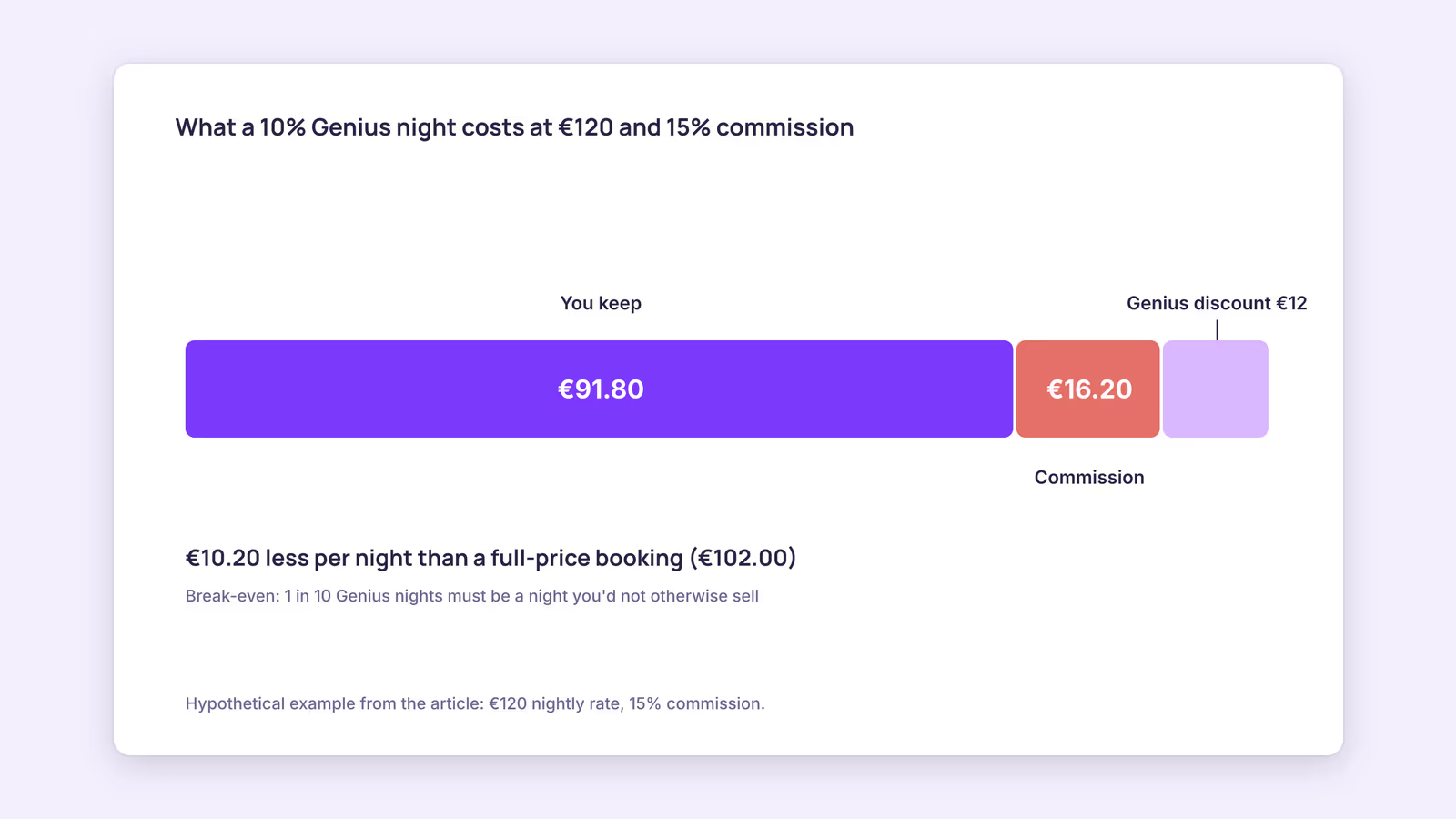
| Genius 10% | €108.00 | €16.20 | €91.80 |
| Genius 15% | €102.00 | €15.30 | €86.70 |
So a 10% Genius booking costs this host €10.20 per night compared to a full-price booking. That's the price of each night that would have sold anyway.
Is Booking.com Genius worth it for hosts?
It's worth it when the extra bookings Genius brings fill nights that would otherwise stay empty, and not worth it when Genius guests mostly replace guests who'd have paid full price.
The break-even test is a single ratio. Using the table above at 10%, each Genius night you'd have sold anyway costs €10.20, and each extra night Genius creates earns €91.80. Divide one by the other:
Break-even share of new nights = cost per cannibalized night ÷ (cost per cannibalized night + net per new night)
€10.20 ÷ (€10.20 + €91.80) = 10%. In other words, if at least one in ten Genius nights is a night you would not otherwise have sold, the program pays for itself in this example. At 15% the same math gives €15.30 ÷ (€15.30 + €86.70) = 15%. In general, the break-even share equals the discount rate. That bar looks low, which suggests Genius is more likely to pay off when you often have unsold nights. It looks very different in a high season where you're already booked solid: then almost every Genius night is cannibalized and you're just discounting.
Our recommendation: treat Genius as a seasonal lever, not a permanent setting, and measure it.
A four-week test you can run
- Record a baseline. Note occupancy, average daily rate and net payout per night for the same four weeks last year, or the four weeks before joining.
- Pick low-demand dates. Run the test when your calendar has gaps, since that's where new nights come from.
- Tag Genius bookings. Booking.com marks them in your reservations; keep a simple count of Genius nights versus other nights.
- Compare net revenue, not bookings. Did total net payout for the period beat the baseline? More bookings at a lower rate isn't a win on its own.
- Decide per season. Keep it for months where it lifted net revenue; check in your extranet whether and how you can step out for peak months.
Also check the obvious interaction: if you already run other Booking.com promotions, confirm in the extranet how Genius combines with them so you don't stack discounts you didn't intend.
Can direct bookings replace the Genius discount?
Partly: a direct booking from a returning guest avoids commission entirely, but it can't replace the new-guest discovery Genius provides, because your own site has no marketplace traffic behind it.
The practical split looks like this. Booking.com, with or without Genius, is where new guests find you. Your own booking page is where past guests, referrals and people who already know your property can book without a platform in the middle. Direct isn't free either: card processing still applies, for example Stripe lists 1.5% + €0.25 for standard EEA cards. If you want to compare the channels in depth, read direct booking vs OTA and why you need a direct booking website. To see how fees differ across platforms side by side, the OTA fee comparison tool lays them out.
When this advice does not apply
- Hotels and larger properties have different economics: many rooms, more empty inventory to fill, and often different Booking.com agreements.
- Your commission rate differs. The worked example uses a hypothetical 15%. Swap in the rate from your own agreement; country, property type and add-on programs change it.
- Host-side Genius terms vary. Discount levels and eligibility for partners come from your extranet, and we couldn't verify the public partner page. If your offer differs from the guest-side levels above, recalculate.
- Cancellation-heavy markets. If Genius guests cancel more on your dates, factor that into the test.
What to do next
- Pull 12 months of occupancy and average daily rate by month from your extranet.
- Find your commission rate on a recent Booking.com invoice.
- Run the net-per-night formula for 10% and 15% at your own rate.
- Try Genius on low-demand dates only and compare net revenue to your baseline.
- Give past guests a way to rebook with you directly, so repeat stays don't carry commission.
FAQ
Is the Booking.com Genius program free for hosts?
There's no sign-up fee mentioned on the public pages we checked, but it isn't free in practice: you fund the guest discount from your own rate on every Genius booking.
What does Level 1 mean for a host?
Booking.com's Genius page says any guest who creates a free account gets Level 1 and a 10% discount at participating properties. So a large share of signed-in guests may qualify.
Does Genius change my commission rate?
Booking.com's commission page says your rate depends on your agreement and that some programs add to it. Check whether Genius changes your rate in your own extranet and invoice rather than assuming either way.
Keep repeat stays commission-free. BookBed's embeddable direct booking widget lets returning guests book on your own site, with payment going into your own Stripe account and no BookBed commission. It won't bring you new traffic; that's still Booking.com's job. See BookBed pricing
Sources
- Booking.com, "Genius loyalty program" — Verified 2026-09-30
- Booking.com for Partners, "Understanding your commission" — Verified 2026-09-30
- Stripe, "Pricing" (Ireland) — Verified 2026-09-30