You're looking at a property, or you already own one, and you want to know whether you can legally rent it to short-stay guests. Short term rental regulations decide that, and they're set at more than one level: your country or state, your city or county, and your own building, HOA, or lease. Passing one level tells you nothing about the others.
Your first action: before you sign anything, write down the exact address and check it against all three levels using the checklist below. Don't rely on a listing agent, a seller, or the fact that other listings exist nearby.
This guide doesn't list rules for specific cities. Rules change often, and a summary written today can be wrong next month. Instead, it shows you where the rules live and what questions to ask.
What are Airbnb regulations, and who sets them?
Short term rental regulations are the legal requirements for Airbnb-style stays: registration or permits, zoning limits, taxes, safety rules, and private restrictions from HOAs, co-op boards, or landlords. Each level can restrict you independently.
Airbnb's own responsible hosting guidance for the United States points hosts to the same layers. It tells you to check HOA or co-op board rules and your lease for subletting bans, to look up local taxes and business license requirements, and to research permitting, zoning, safety, and health regulations with the authorities that govern property use in your area. It also flags special rules for rent-controlled and subsidized housing.
Here's how the layers typically split:
- National or state level. Usually covers taxes (occupancy, sales, VAT or GST, income tax) and sometimes registration frameworks. In the EU, a regulation on short-term rental data collection adds registration and data-sharing duties that member states and platforms implement; check your national or regional authority for how it applies where you host.
- City or county level. This is where most restrictions on whether you can host live: zoning, permits, registration numbers, primary-residence rules, night caps, and minimum stay thresholds.
- Private level. HOA bylaws, condo or co-op rules, and lease clauses can prohibit short stays even where the city allows them.
What is a short term rental permit or ordinance?
A short term rental ordinance is the local law that defines what counts as a short-term rental and what you must do to operate one; the permit or registration number is the document that proves you've complied with it.
New York City shows how this can work in practice. Under Local Law 18, hosts must register with the Mayor's Office of Special Enforcement, and booking platforms such as Airbnb, Vrbo, and Booking.com are prohibited from processing transactions for unregistered short-term rentals. The city also keeps a Prohibited Buildings list, and rentals of 30 consecutive days or more are exempt from the registration requirement.
That pattern is worth understanding even if you host elsewhere: some cities now enforce rules through the platforms themselves, so an unregistered listing may simply stop taking bookings. Whether your city does this is something you need to confirm with your local authority.
Questions to answer for your address:
- Does the city or county have a short-term rental ordinance, and how does it define "short-term" (often a night threshold)?
- Is short-term renting allowed in this zoning district?
- Is a permit, license, or registration number required, and must it appear on your listing?
- Is there a primary-residence requirement, a cap on nights per year, or a cap on the number of permits?
- Are there safety inspections, occupancy limits, or neighbor-notice rules?
- Is the building on any prohibited or restricted list?
How do Airbnb tax laws and occupancy taxes work?
Occupancy and similar taxes usually apply to short stays, and who collects them depends on the jurisdiction and the channel: sometimes the platform collects and remits, sometimes you must register and remit yourself.
Airbnb publishes a list of areas where it collects and remits taxes on hosts' behalf, which can include occupancy taxes, VAT, and GST where it has agreements with governments or is required by law. Read the entry for your exact location, because coverage can be partial: a platform may collect one tax and leave another to you.
Two practical consequences:
- Direct and non-Airbnb bookings. Platform collection only covers bookings made on that platform. If you take bookings through your own site (see why hosts build a direct booking website) or another channel, you'll usually be responsible for those taxes yourself.
- Income tax is separate. Occupancy tax collection by a platform doesn't settle your income tax. Ask a local tax adviser how rental income is treated where you live.
How can you check a property before you buy or lease?
Run a three-level compliance check on the exact address, get answers in writing where possible, and stress-test the numbers for a scenario where short stays become restricted.
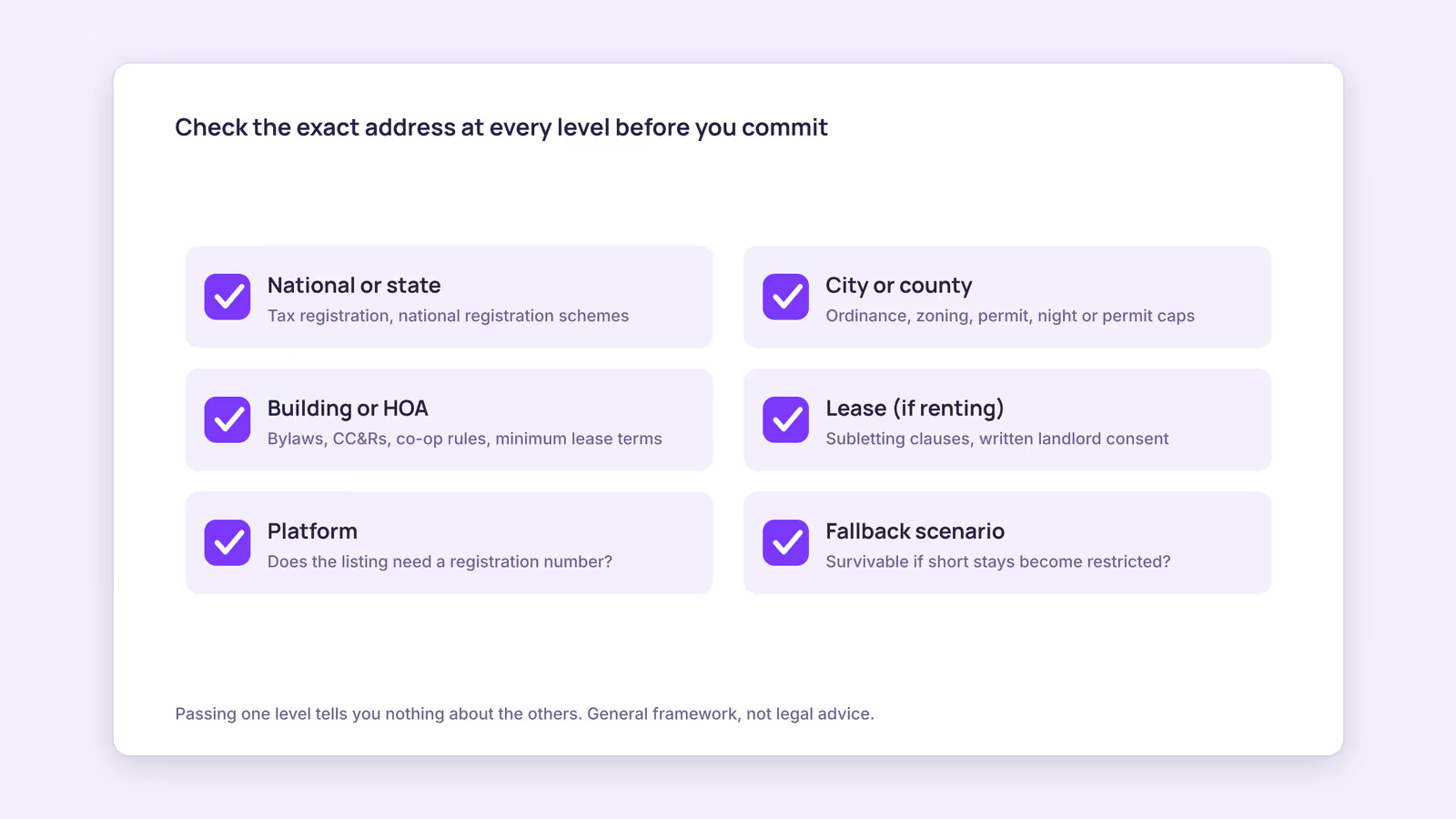
This diagnostic table shows what to check, where to check it, and what a red flag looks like.
| Level | What to check | Where to look | Red flag |
|---|---|---|---|
| National or state | Tax registration, any national registration scheme | Tax authority, national tourism or housing ministry | Registration required but you can't qualify |
| City or county | Ordinance, zoning, permit or registration, caps | Official city or county website, zoning or planning office | Permit cap reached, primary-residence rule, zone excludes short stays |
| Building or HOA | Bylaws, CC&Rs, co-op rules, minimum lease terms | HOA or board documents, property manager | Minimum lease term longer than your planned stays |
| Lease (if renting) | Subletting and short-stay clauses | Your lease, written landlord consent | No written consent |
| Platform | Whether the listing needs a registration number | Platform help center for your region | Listing can't be published without a number you don't have |
Then stress-test the investment. A worked example with hypothetical numbers: if your monthly mortgage and costs total 2,000 and a long-term tenant would pay 2,200, a ban on short stays hurts profit but doesn't sink you. If costs are 4,000 and long-term rent is 2,000, the same rule change leaves a 2,000 monthly gap. Our recommendation: only buy if the fallback scenario is survivable. Run your own figures with the vacation rental ROI guide.
Many rules target stays below a night threshold, so mid-term stays can be a fallback in some places. New York City's 30-day exemption from registration is one example, but other rules may still apply, so confirm locally. If you go that route, length-of-stay discounts help you price longer bookings.
When this advice does not apply
This is a general framework, not legal advice. Rules vary by country, region, city, and even neighborhood, and they change often. Hosts in Croatia should read the dedicated Croatia short-term rental regulations guide. If you're facing enforcement, a fine, or a dispute with an HOA or landlord, talk to a local lawyer rather than relying on a blog post. Penalties, fine amounts, and enforcement practices differ widely, so check with your local authority for the figures that apply to you.
What to do next
- Write down the exact address and zoning district of the property.
- Find the official short-term rental ordinance on the city or county website, or call the planning or zoning office.
- Request HOA, co-op, or building documents, or written landlord consent if you rent.
- Check the platform's tax collection page for your location and register for any taxes it doesn't cover.
- Model a long-term or mid-term rental fallback before you commit money.
FAQ
Is Airbnb regulated everywhere?
No single rule applies everywhere. Many places regulate short stays through taxes, permits, or zoning, while others have few specific rules. Check your national, local, and building rules for your exact address.
What are the legal requirements for Airbnb hosts?
Typically: any required permit or registration, zoning compliance, tax registration and remittance, safety requirements such as smoke and carbon monoxide detectors, and permission from your HOA, board, or landlord. The exact list depends on your location.
Can my HOA ban short-term rentals if the city allows them?
HOA and building rules are private restrictions that can apply on top of city law. Read the bylaws carefully and ask the association in writing before you list.
Direct booking widget: If you take bookings outside the platforms, BookBed's embeddable direct booking widget lets guests book and pay through Stripe checkout into your own Stripe account, with 0% commission. You still handle any permits and taxes yourself. See plans and start a free trial
Sources
- NYC Mayor's Office of Special Enforcement, "Short-Term Rental Registration and Verification by Booking Services" — Verified 2026-09-30
- Airbnb Help Center, "Responsible hosting in the United States" — Verified 2026-09-30
- Airbnb Help Center, "Areas where tax collection and remittance by Airbnb is available" — Verified 2026-09-30