You keep hearing that you "need a PMS," but your setup already works: Airbnb's app, a Booking.com extranet, a shared calendar and a spreadsheet for money. A vacation rental property management system (PMS) promises to replace that patchwork. Before you compare vendors, you need to know what the term actually covers and which part of your week it would change.
Start with one action today: list the five jobs every rental business does (calendar, reservations, guest messages, turnovers, money) and write next to each one where it lives right now. That list is the yardstick for everything below.
What is a vacation rental property management system (PMS)?
A vacation rental property management system is software that keeps one shared record of your units, reservations, guests and payments, then runs daily work from that record instead of from each booking platform separately.
The term comes from hotels, where a PMS has long been the front-desk system that holds room inventory and guest folios. In short-term rentals, the idea is the same, but the inventory is spread across booking platforms you don't control. So a vacation rental PMS has two sides:
- The record: units, rates or rate rules, reservations from every channel, guest details and what each stay earned.
- The work on top of it: blocking dates, sending messages, scheduling cleans, taking direct payments and producing reports.
"PMS" also means other things in other industries, which is why searches for the acronym are messy. In this post, it means only property management system in the rental sense.
Vendors use the label loosely. One tool calling itself a PMS may cover calendars and messaging only. Another may add owner statements, accounting exports and smart locks. The label tells you less than the feature list does.
What does a vacation rental PMS actually do?
A PMS takes the jobs you currently spread across platforms, chats and spreadsheets and ties them to each reservation, so a new booking can trigger calendar blocks, messages, cleaning tasks and bookkeeping without you re-entering it.
Use this table to check your own list from the opening. For each job, the middle column is the warning sign that the manual way is costing you, and the right column is the question to ask any vendor.
| Job | Sign it's outgrowing your current setup | What to ask a PMS vendor |
|---|---|---|
| Calendar and availability | You block dates by hand on several platforms after each booking | Does it connect by iCal or by API to each channel I use? |
| Reservations | You search two or three apps to find one guest's stay | Do all channels land in one booking list per unit? |
| Guest messages | You retype the same check-in details for every stay | Can messages be scheduled per stay, and where do they get sent? |
| Turnovers | Your cleaner finds out about a booking from you, by text | Does a booking create a cleaning task automatically? |
| Money and records | Reconciling payouts and fees takes an evening each month | Which reports, invoices or tax exports are included? |
The calendar row deserves the most attention, because how a PMS connects to a channel changes how fast bookings cross over. Some connect through a platform's API. Others use iCal, a calendar file each platform fetches on its own schedule. Airbnb says your calendar "automatically updates every 3 hours" from connected calendars, and Booking.com says it "automatically imports any connected calendar every two hours" and that calendar sync isn't real time. Booking.com's calendar sync also has eligibility limits, including 20 room types or fewer and no connectivity provider on the property. For the trade-offs, see iCal vs API sync.
One more thing to check before you connect any software to Airbnb: Airbnb's service fee article says the single-fee structure, where the whole fee comes out of your payout, is mandatory for hosts who use property management software. Most hosts on that structure pay 15.5%, according to the same page. Run your own numbers before you switch, because that change can matter more than the software's subscription.
How is a vacation rental PMS different from a hotel PMS or a channel manager?
A hotel PMS is built around a front desk and identical room types; a channel manager moves availability between booking sites; a vacation rental PMS keeps the full reservation record and often includes channel management.
In practice:
- Hotel PMS: designed for check-in desks, room types with many identical rooms, folios and night audits. It can be overkill for a few self-catered apartments.
- Channel manager: focused on keeping availability, and sometimes rates, consistent across Airbnb, Booking.com and others. It's often the first tool a multi-channel host buys.
- Vacation rental PMS: holds the reservation record and runs messaging, tasks, payments and reports around it, often with a channel manager built in.
The lines blur, and many products sit between these categories. For a side-by-side of the two most confused terms, read PMS vs channel manager.
To show how wide the range is, compare two vendors' own pricing pages. Hospitable's pricing page lists a free Essentials plan with channels and inbox, limited automated messaging and cleaning workflows, while its higher plans add a direct booking site, owner statements and QuickBooks accounting. Guesty's pricing page says price depends on listings and add-ons, with packages that "start from $9/month per listing." Both are sold as property management software, yet the scope and pricing model differ. The PMS pricing models guide covers how those models compare.
Do you need a PMS, or is a lighter tool enough?
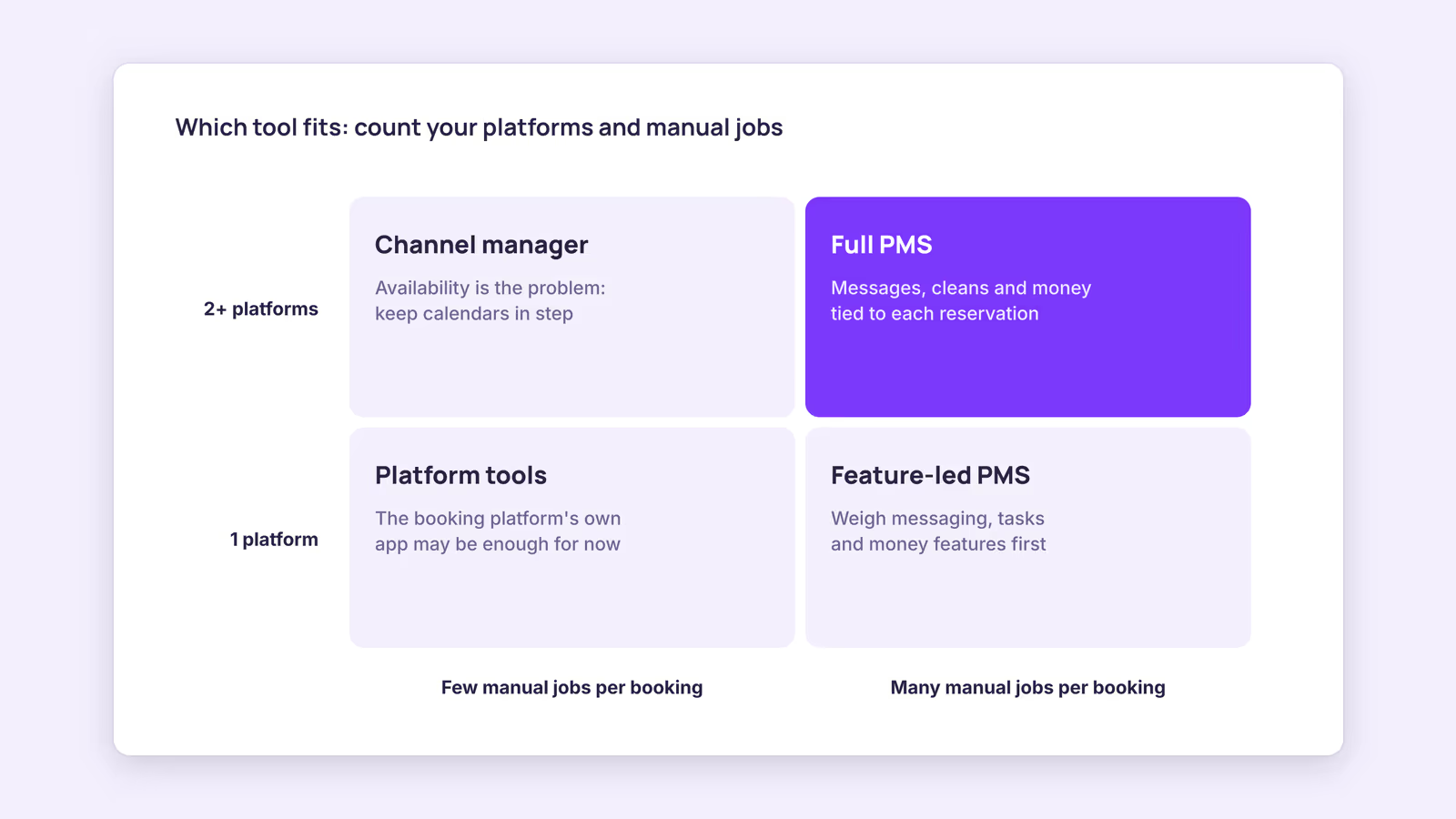
You likely need a full PMS when the work around each booking, not the booking itself, is eating your time; if double bookings are your only problem, a calendar sync tool may be enough.
Answer each question with yes or no:
- Do you list each unit on two or more booking platforms?
- Do you send the same arrival details by hand for most stays?
- Does someone other than you clean or hand over keys?
- Do you take bookings directly, outside the big platforms?
- Do you need invoices, VAT figures or owner statements every month?
- Has a booking, message or clean slipped through in the last season?
How to read your answers:
- Only question 1 is yes: your problem is availability. A channel manager or iCal sync tool covers it.
- Question 1 plus one or two others: look for a tool that combines sync with the specific jobs you answered yes to. Don't pay for modules you won't use.
- Four or more yes answers: this suggests the manual work around each booking is your bottleneck, which is what a PMS that ties messages, tasks and money to each reservation is built for. Our recommendation: trial one with your busiest unit first and compare against your written list.
For smaller portfolios, PMS for small hosts walks through the one-to-three-unit case in more detail.
When this advice does not apply
- Hotel-style properties: if you run a guesthouse with shared room types and a reception desk, a hotel PMS may fit better than a vacation rental one.
- Long-term lets: software for tenants, leases and rent collection is a different category, even though it's often also called property management software.
- Single-platform hosts: if you list one unit on Airbnb only and handle guests yourself, the platform's own tools may be all you need for now.
- Managed-owner portfolios: if you manage units for other owners, owner statements and payouts become core requirements, so weigh those first.
What to do next
- Finish the five-job list from the opening and mark each job as fine, painful or broken.
- Answer the six questions above and decide whether you need sync, a partial tool or a full PMS.
- For every tool you consider, ask how it connects to each channel and check the fee structure your Airbnb listings would use.
- Trial your shortlist on one unit for two weeks and note which painful jobs actually got easier.
FAQ
What does PMS stand for in vacation rentals?
PMS stands for property management system. In short-term rentals, it means software that keeps reservations, guests and payments for your units in one record and runs daily work from it.
What is a hotel property management system, and can a vacation rental use one?
A hotel PMS runs front-desk operations for room types, check-in and guest folios. A vacation rental can use one, but many self-catered hosts find it built around workflows they don't have.
Is BookBed a PMS?
BookBed describes itself as a channel manager and booking management platform. It keeps one calendar and booking list per unit with two-way iCal sync and a direct booking widget; Pro adds automated guest messaging and invoicing.
About BookBed: BookBed gives each unit one calendar with two-way iCal sync for Airbnb and Booking.com, so every booking lands in one place you can check. Airbnb and Booking.com still fetch calendars on their own schedules. See BookBed pricing
Sources
- Airbnb Help Center, "Airbnb service fees" — Verified 2026-09-30
- Airbnb Help Center, "Sync your home host calendar to other websites" — Verified 2026-09-30
- Booking.com for Partners, "Updating your availability calendar in the extranet" — Verified 2026-09-30
- Hospitable, "Pricing" — Verified 2026-09-30
- Guesty, "Pricing" — Verified 2026-09-30