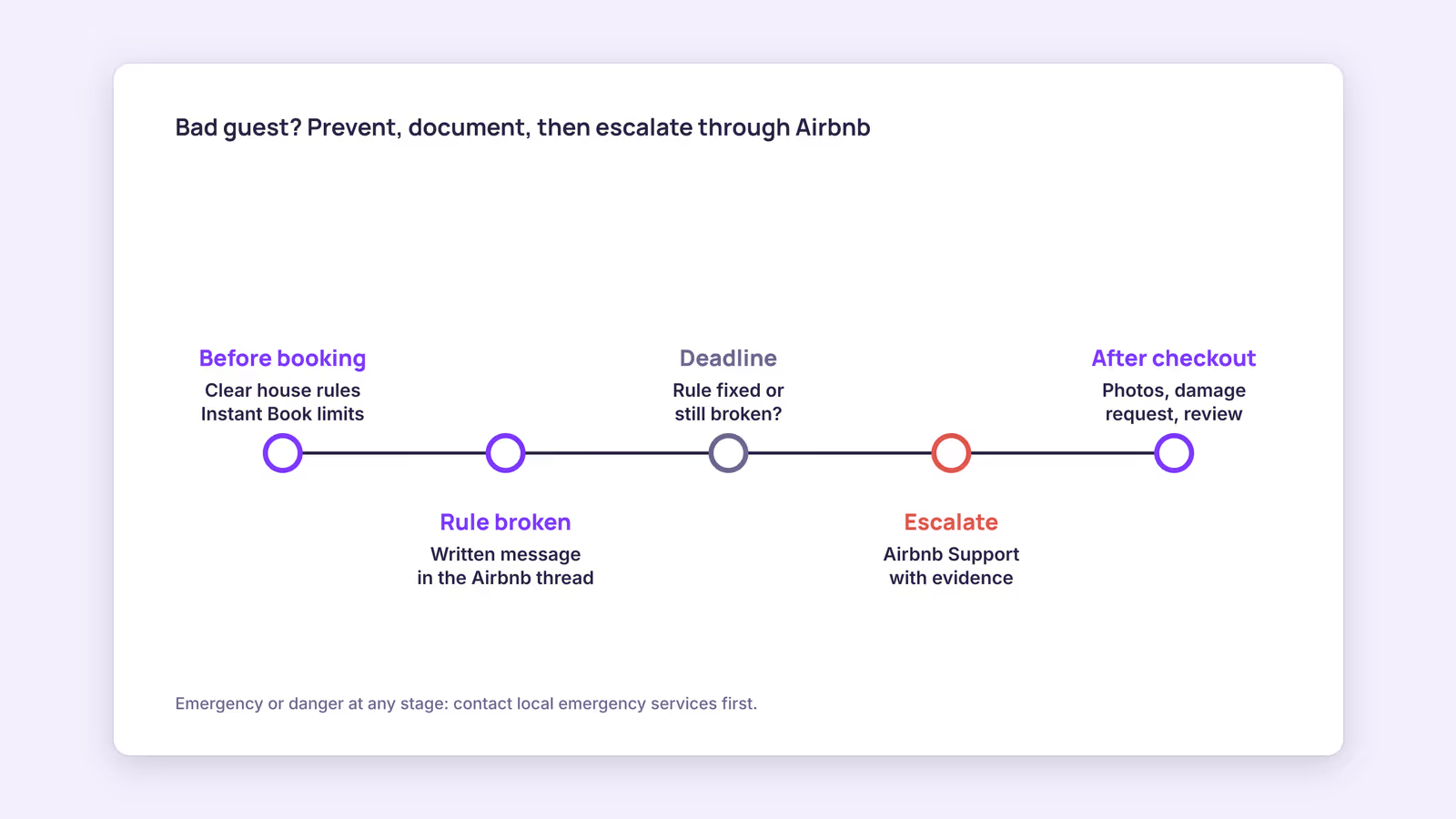
A guest has brought a dog you don't allow, or your noise monitor is spiking at midnight, or someone is hinting that a refund would keep their review kind. Knowing how to deal with bad Airbnb guests comes down to three moves: prevent what you can, document everything in writing, and escalate through Airbnb's own policies instead of improvising.
Start with one action today: reread your listing description and house rules as if you were a guest planning a party. If the rules don't say who may be on the property, when quiet hours start and whether pets are allowed, you'll have nothing clear to point to later.
How to deal with bad Airbnb guests before they book?
You avoid most bad Airbnb guests by writing specific house rules, restricting who can book instantly, asking a few direct questions about the trip, and declining requests that try to move the conversation off Airbnb.
Airbnb does part of the screening for you. Its reservation screening uses signals such as the guest's account history, the listing and message topics, and may block a booking it judges to carry a higher risk of a disruptive gathering. That's a backstop, not a guarantee, so add your own layer:
- Instant Book settings. Airbnb lets you add guest parameters to Instant Book, such as requiring positive reviews from other hosts. Tighter settings mean fewer instant bookings, so it's a trade-off, not a free win.
- Explicit rules. Airbnb's own party-prevention guidance suggests stating in your description and house rules whether visitors not on the reservation are allowed, especially for large homes or homes with a pool.
- Three questions. The same guidance suggests asking the purpose of the trip, who else is staying, and whether the guest has read the house rules. Vague or evasive answers are information.
- Off-platform requests. Airbnb's Off-Platform and Fee Transparency Policy prohibits moving bookings or payment off Airbnb. A guest pushing to pay or talk elsewhere before booking is asking you to break policy, and you lose the written record you'll need later.
- Stay rules. A minimum stay on weekends is a common party deterrent. This is a judgment call, not a proven fix, and it costs you some short-stay demand.
What should you do when an Airbnb guest is breaking house rules?
When an Airbnb guest is breaking house rules, message them in the Airbnb app right away, name the specific rule and what you observed, give a clear deadline to fix it, and keep every reply in that thread.
The written thread matters more than the tone of any phone call. If you later ask Airbnb to cancel the stay, pay for damage or remove a review, the messages are your evidence. A phone call leaves nothing behind, so if you do call, follow up in writing with a summary.
A template you can adapt:
"Hi [name], our exterior doorbell camera shows a dog arrived with your group this afternoon. Our house rules, which you confirmed at booking, don't allow pets. Please arrange somewhere else for the dog by 8 p.m. today and reply here to confirm. If that isn't possible, we'll need to contact Airbnb about the reservation."
Know the monitoring limits before you rely on devices. Airbnb's camera and device policy bans security cameras and recording devices that monitor any indoor space, even if they're switched off. Exterior cameras are allowed if their location is disclosed in the listing. Noise decibel monitors, which measure sound levels without recording audio, are allowed indoors if disclosed, but not in bedrooms, bathrooms or sleeping areas.
Which response fits which problem?
Use this as a triage table. It's our recommendation based on the policies cited in this post, not an Airbnb rulebook.
| What you observe | First move | If it continues | Evidence to save |
|---|---|---|---|
| Unregistered pet or extra guests | Written message with a deadline | Contact Airbnb about the reservation | Exterior camera clip, messages |
| Noise alert, possible gathering | Written message asking it to stop now | Contact Airbnb; local authorities if unsafe | Monitor alerts with timestamps, neighbor reports |
| Open-invite party or public advert | Contact Airbnb immediately | Local emergency services if there's danger | Screenshots of the advert, clips |
| Damage found at checkout | Photograph before cleaning | Reimbursement request through Airbnb | Dated photos, repair quotes, receipts |
| Refund demand tied to a review | Don't pay; reply factually in writing | Report the review under the Reviews Policy | The message containing the threat |
How do you report a bad guest on Airbnb when a party or damage happens?
Report a party or damage through Airbnb Support and your reservation's tools, with dated evidence attached; in an emergency, contact local emergency services first and deal with the platform afterward.
Parties. Airbnb's Community Disturbance Policy doesn't allow open-invite parties or disruptive gatherings of any size, and lists signs such as excessive noise, trash, trespassing and parking nuisances. Airbnb says it may warn, suspend or remove accounts that violate it. Its party-prevention guidance also states that you can cancel without consequences if you provide evidence a guest intends to have a party. Before canceling on your own, check Airbnb's Host Cancellation Policy: unexcused cancellations carry fees of 10%, 25% or 50% depending on timing, with a $50 minimum. Fees can be waived for valid reasons, but Airbnb decides after reviewing your documentation, so contact Support rather than canceling blind.
People who won't leave. If a guest refuses to leave after Airbnb has dealt with the reservation, don't try to remove them physically. Contact local authorities. What they can do depends on local law, which Airbnb can't override.
Damage. AirCover for Hosts includes damage protection that can reimburse certain guest-caused damage when the guest doesn't pay, including some specialized cleaning. Airbnb states it isn't a substitute for your own insurance. Photograph everything before your cleaner resets the unit; once it's cleaned, the evidence is gone. For the step-by-step claim flow, see our guide to the Airbnb Resolution Center.
What if a guest threatens a bad review unless you refund them?
If a guest threatens a bad review unless you refund them, don't pay, keep the exchange in the Airbnb thread, and report it, because Airbnb's Reviews Policy forbids using review threats to get compensation.
Airbnb's Reviews Policy says hosts and guests "may not threaten a negative review as a means to obtain unwarranted compensation, refund, or other incentive." It also covers retaliatory reviews: a review counts as retaliatory only if the reviewer broke a policy, was notified of it, and then left a biased review because of that report. That's why the written warning from the previous section matters. It's what turns a bad review into a removable one.
Removal isn't automatic. Airbnb reviews the dispute and decides. Separate a real complaint from a pressure tactic: if the guest reports a genuine problem, fix or compensate it on its merits, and handle it the way our guest complaints guide describes. Refund because the complaint is valid, never because of the threat.
When this advice does not apply
- Booking.com, Vrbo or direct guests. The policies above are Airbnb's. Other channels have their own rules; for Booking.com damage, see our damage policy guide.
- Hotels and boutique venues. Airbnb's guidance lets traditional hospitality venues allow appropriate events at their discretion.
- Local law. Removing an occupant, recording on camera and noise limits are governed by local law, which can be stricter than Airbnb's policies. Ask a local lawyer when in doubt.
- Japan and other special regimes. Airbnb's camera and AirCover rules have country-specific exceptions, including Japan.
What to do next
- Rewrite your house rules to name visitor, pet, quiet-hour and event limits explicitly.
- Review your Instant Book guest requirements and decide whether the trade-off suits each listing.
- Disclose any exterior cameras and noise monitors in your listing, and remove any device that watches indoor space.
- Save the message template above and a checkout photo checklist on your phone.
- Bookmark Airbnb's Community Disturbance, Reviews and AirCover pages so you're not searching mid-incident.
FAQ
What happens if a guest breaks Airbnb rules?
Airbnb says it may educate, warn, suspend or remove guests who violate policies such as the Community Disturbance Policy, depending on severity and repetition. Your own report, with evidence, is often what starts that process.
Can I leave an honest bad review for a guest?
Yes, if it's about their stay and follows the Reviews Policy. Stick to verifiable facts, such as rules broken and damage found, and avoid personal attacks.
Can I put a camera inside my Airbnb to catch rule-breakers?
No. Airbnb doesn't allow cameras or recording devices monitoring any indoor space, even if they're off. Disclosed exterior cameras and disclosed noise monitors outside sleeping areas and bathrooms are allowed.
Set expectations before arrival. BookBed Pro's automated guest messaging sends pre-arrival, mid-stay and post-stay messages, so your house rules reach every guest before check-in without you retyping them. It won't screen guests or enforce Airbnb policy for you. See BookBed Pro →
Sources
- Airbnb, "Community Disturbance Policy" — Verified 2026-09-30
- Airbnb, "How Airbnb screens for potential disruptive gathering risk" — Verified 2026-09-30
- Airbnb, "Restrictions on security cameras and other devices in homes" — Verified 2026-09-30
- Airbnb, "Authentic and trustworthy reviews (Airbnb's Reviews Policy)" — Verified 2026-09-30
- Airbnb, "Host Cancellation Policy for homes" — Verified 2026-09-30